Natural history / field notes
Cool forests with a bamboo understory
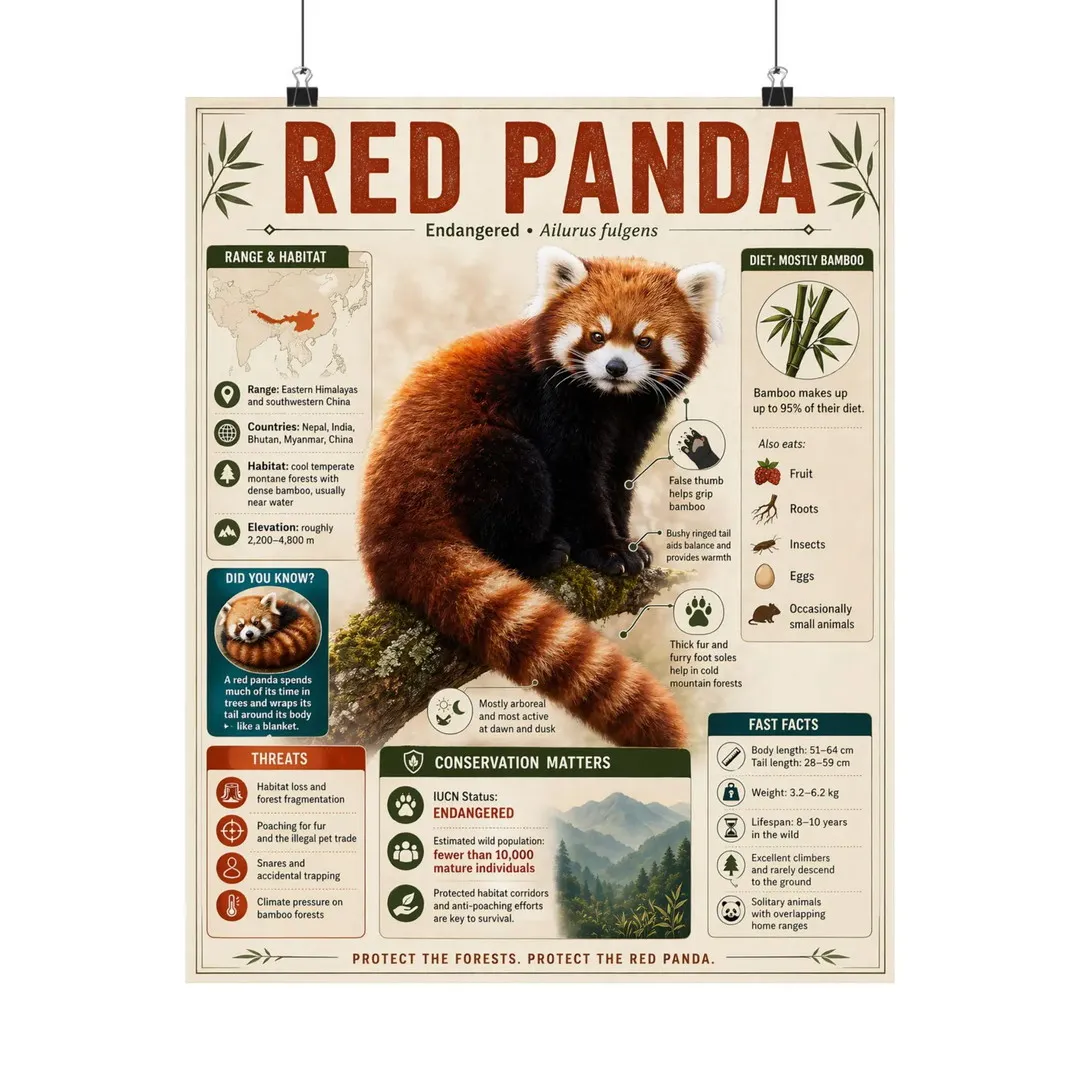
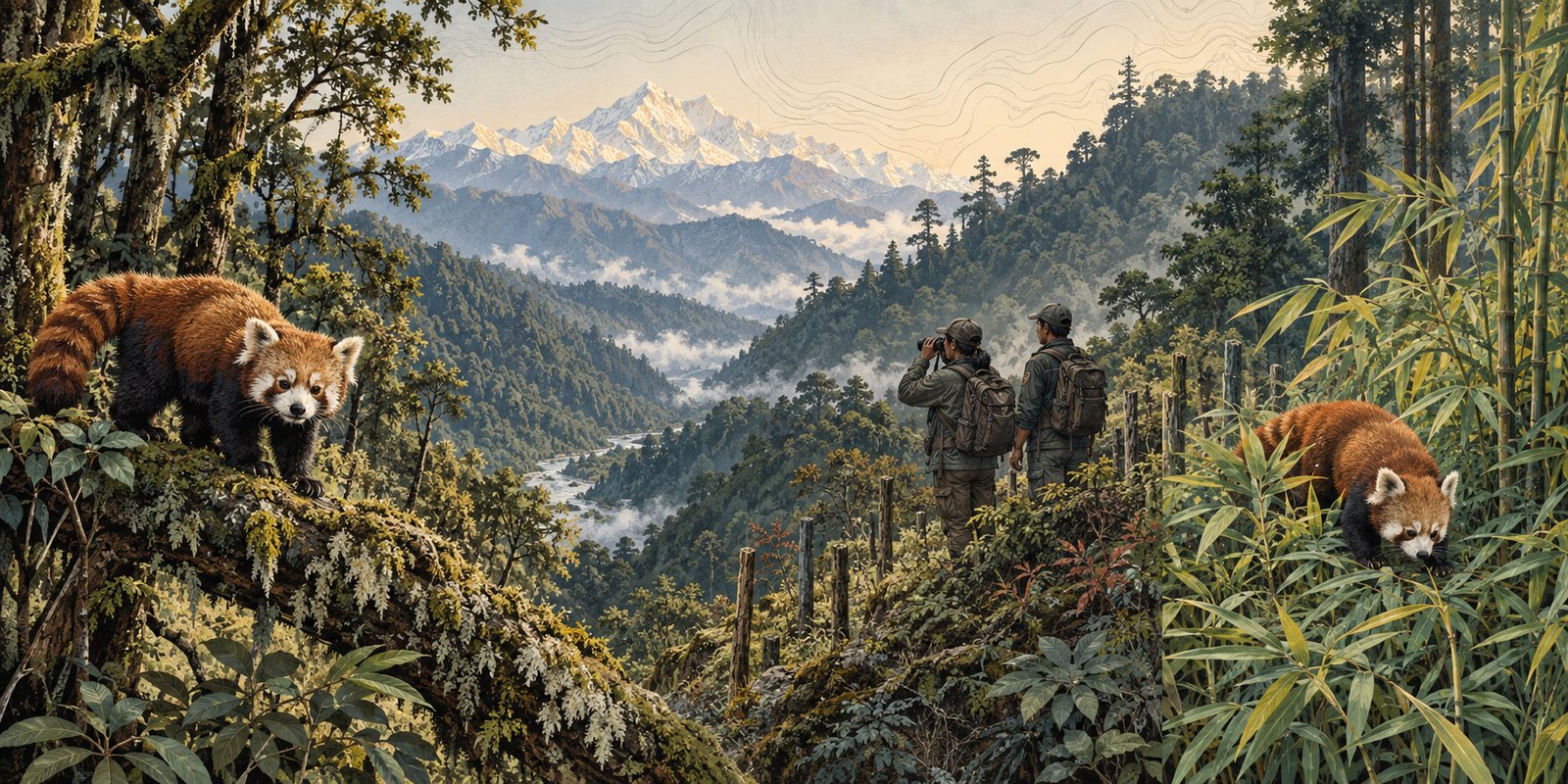
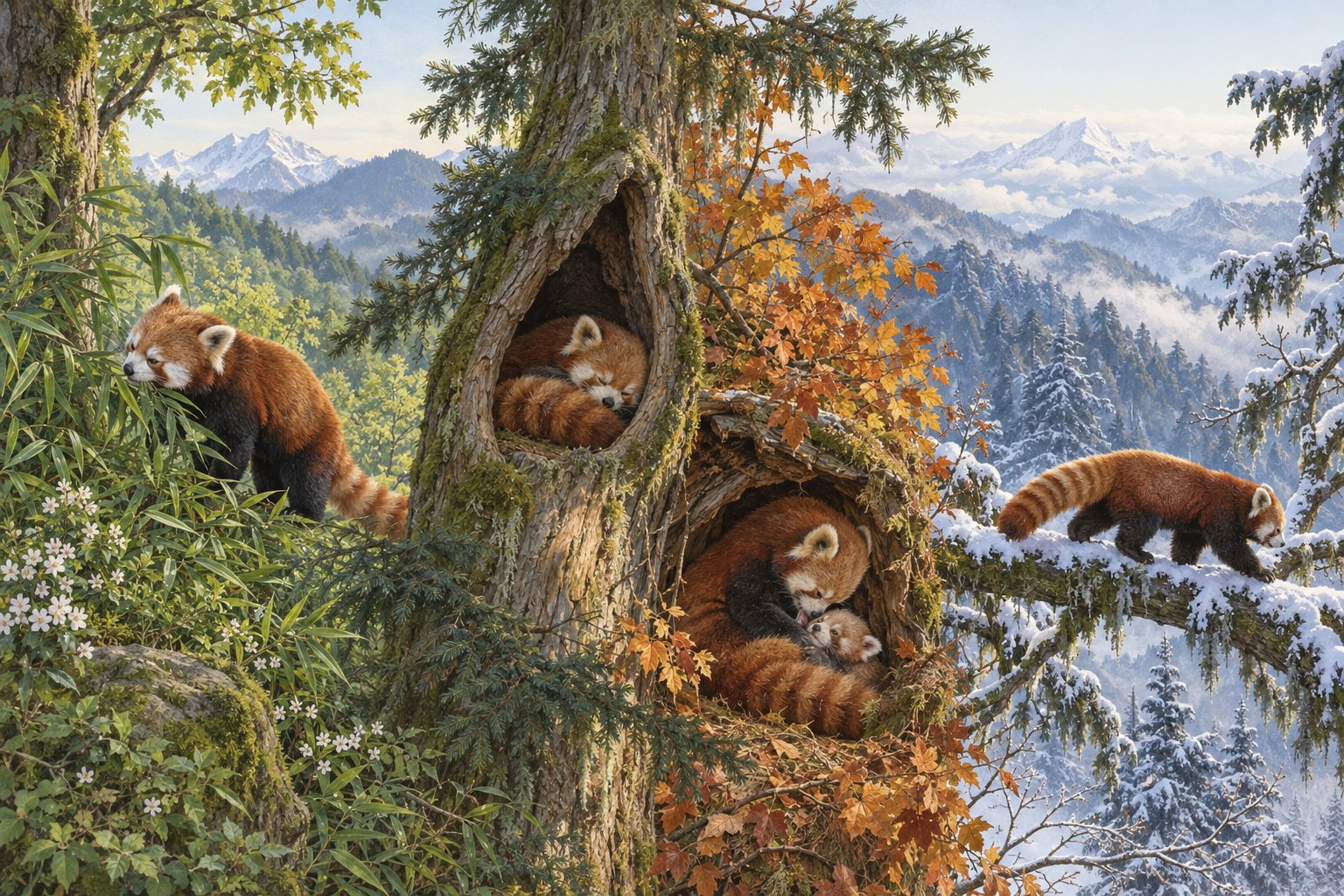
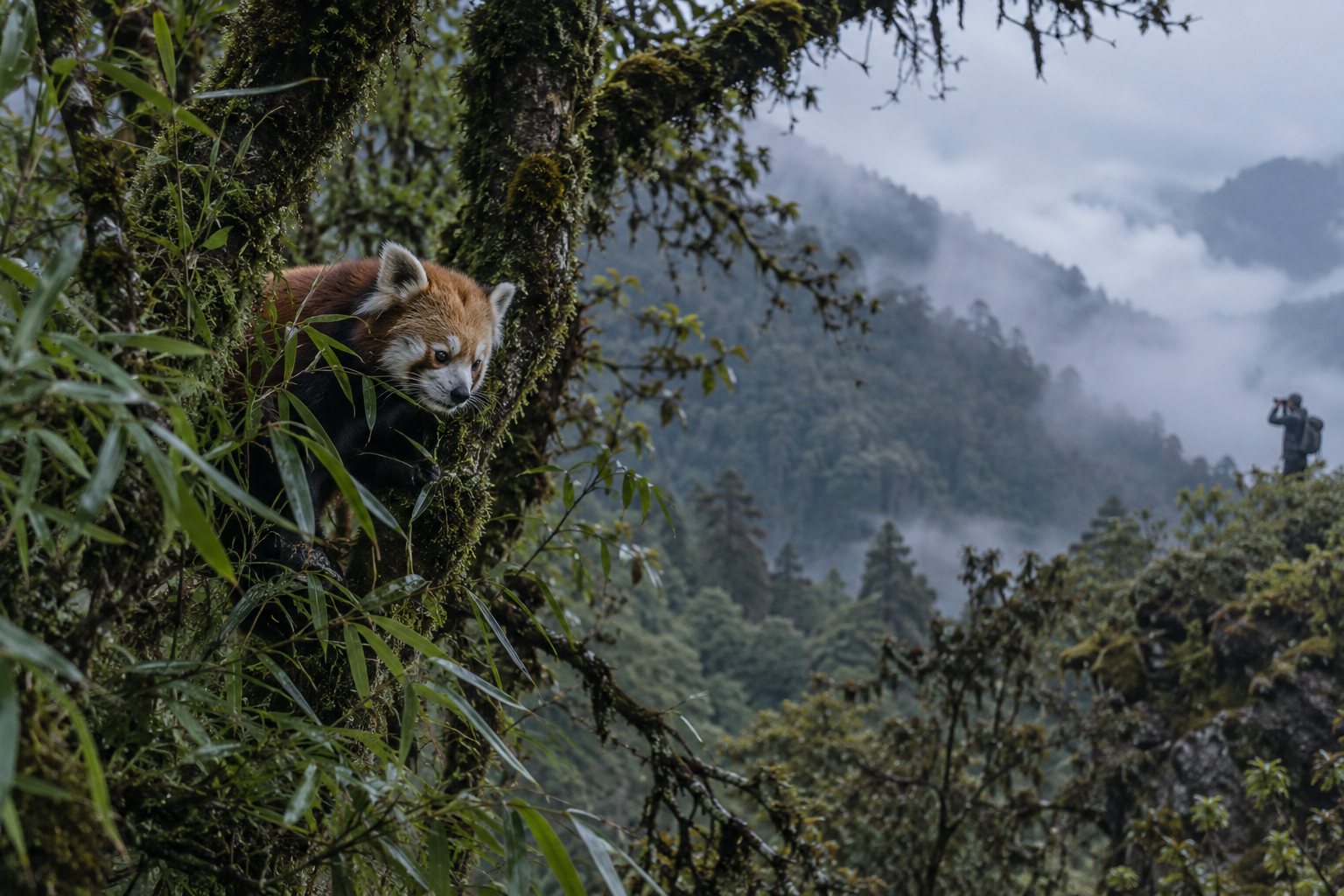
Red pandas depend on temperate mountain forests with dense understory, tree cavities, and connected canopy. Elevation, moisture, and seasonal snow shape where suitable habitat persists, while bamboo availability can shift across seasons and sites.
Fragmentation turns a continuous climbing world into isolated pockets.
Built for a branch-by-branch life
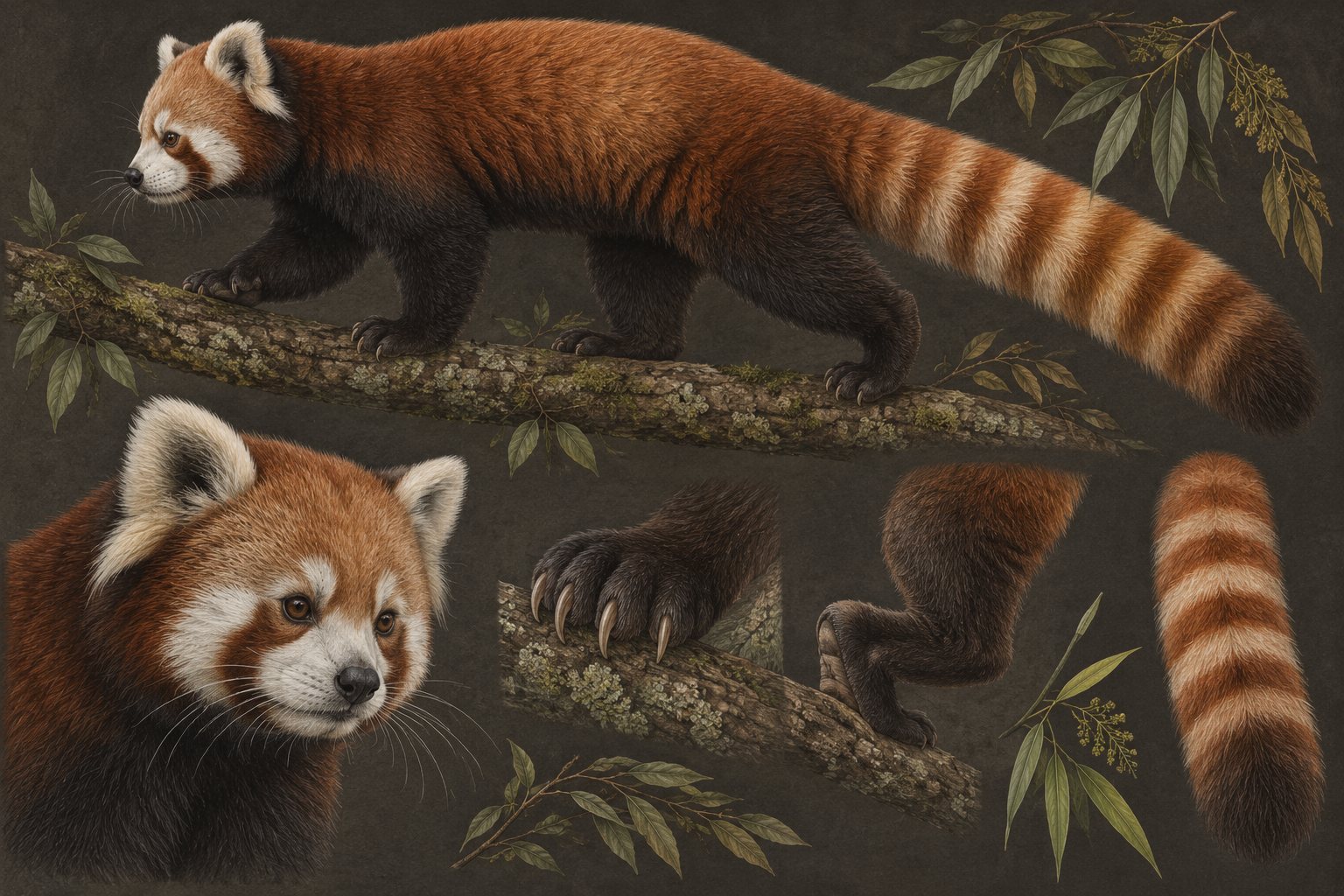
A flexible ankle, semi-retractable claws, dense fur, and a balancing tail all make sense when the safest route is above the ground. The animal’s famous cuteness is an adaptation story before it is an aesthetic one.
Bamboo is important, but the forest around the bamboo is what makes a red panda population viable.
Corridors, communities, continuity
Conservation groups pair habitat corridors and protected areas with community stewardship, livestock-dog management, and monitoring. Keeping forests connected is a practical intervention with benefits beyond one species.
A specialist’s small decisions
The red panda’s ankle, claws, coat, and tail each solve a small problem of life above the ground. Together they describe an animal that chooses branches, shade, and cool air with remarkable precision.
Bamboo matters because it feeds the specialist, while the surrounding forest supplies the routes, cavities, and climate that make feeding possible.
Connection is the intervention
A corridor is a promise that a fragmented forest can become navigable again. Protected areas, community monitoring, and careful conflict reduction give that promise practical shape.
When people can keep habitat connected, a red panda can spend its energy on the ordinary work of being a red panda: climbing, feeding, resting, and raising the next generation.