Natural history / field notes
An island specialist with a wide appetite
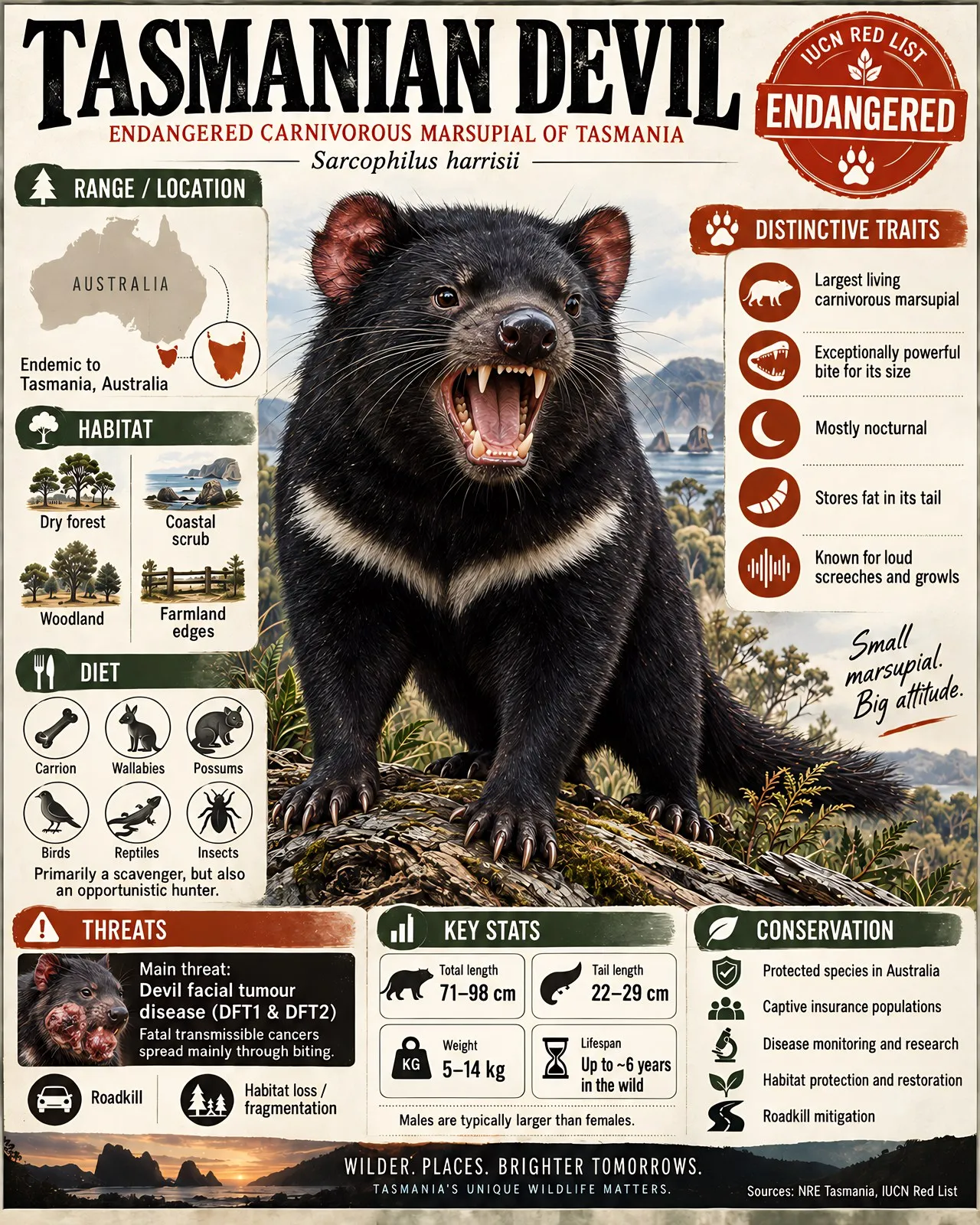
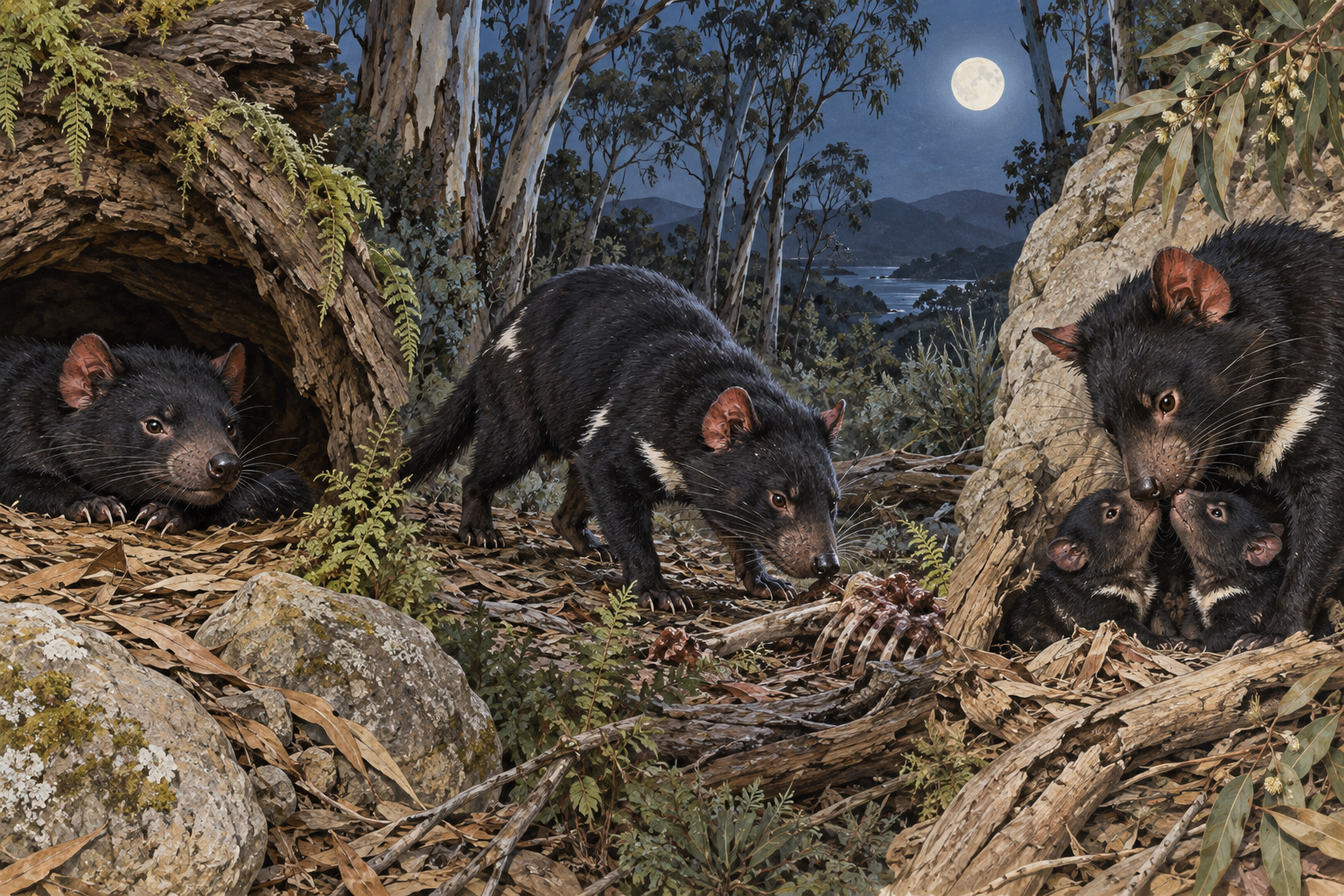
Tasmanian devils occur across a range of Tasmanian habitats, from coastal country and dry woodland to wetter forest. They travel at night, shelter by day, and use a varied diet that includes carrion and prey.
That flexibility does not make habitat irrelevant. Roads, den sites, seasonal food, and connected cover determine how safely a devil can move through the landscape.
The clean-up crew of the bush
As scavengers and predators, devils help remove carcasses and redistribute nutrients. Their feeding behaviour is one reason a healthy devil population matters beyond the species itself.
The familiar growl is part of a social animal negotiating food and space, not evidence that the species is simply aggressive.
A conservation story written in transmission
Devil facial tumour disease is a transmissible cancer that has caused severe declines in affected populations. Monitoring, insurance populations, disease research, and the preservation of healthy wild devils work together rather than as separate solutions.
Keeping uncertainty visible matters: disease prevalence and local recovery can vary, so broad claims about a single island-wide outcome should be avoided.
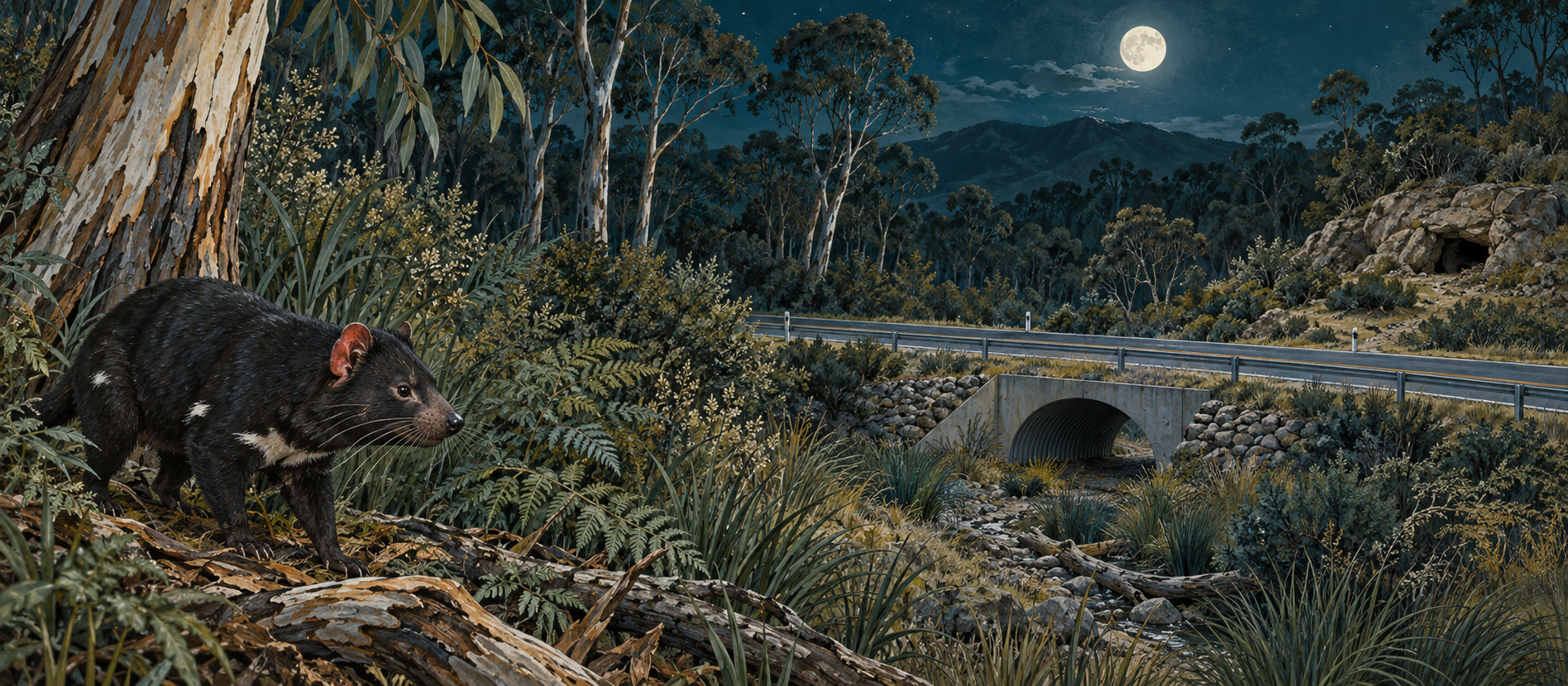
Night routes, dens, and road edges
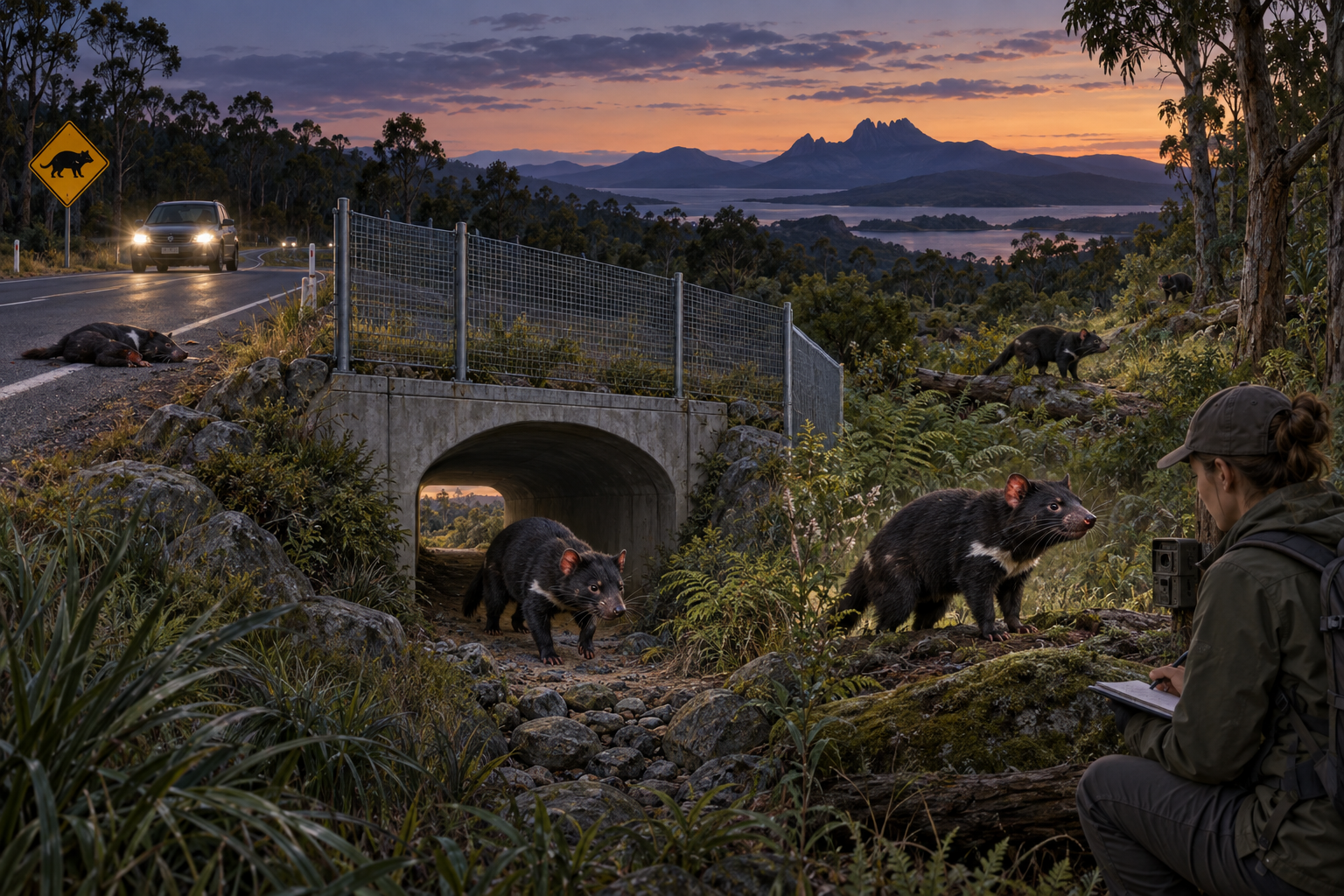
A devil’s life is made of repeated movements between shelter, food, and social encounters. That makes road mortality a practical conservation problem: a short crossing can decide whether an individual returns to its den.
Connected habitat and careful driving are ordinary interventions with outsized value for a nocturnal species.
Resilience needs a living population
Conservation programmes combine disease surveillance, genetic and captive-management work, field research, habitat protection, and public action around roads. The goal is not to turn a wild species into a museum specimen; it is to keep wild devils breeding, moving, and scavenging in Tasmania.
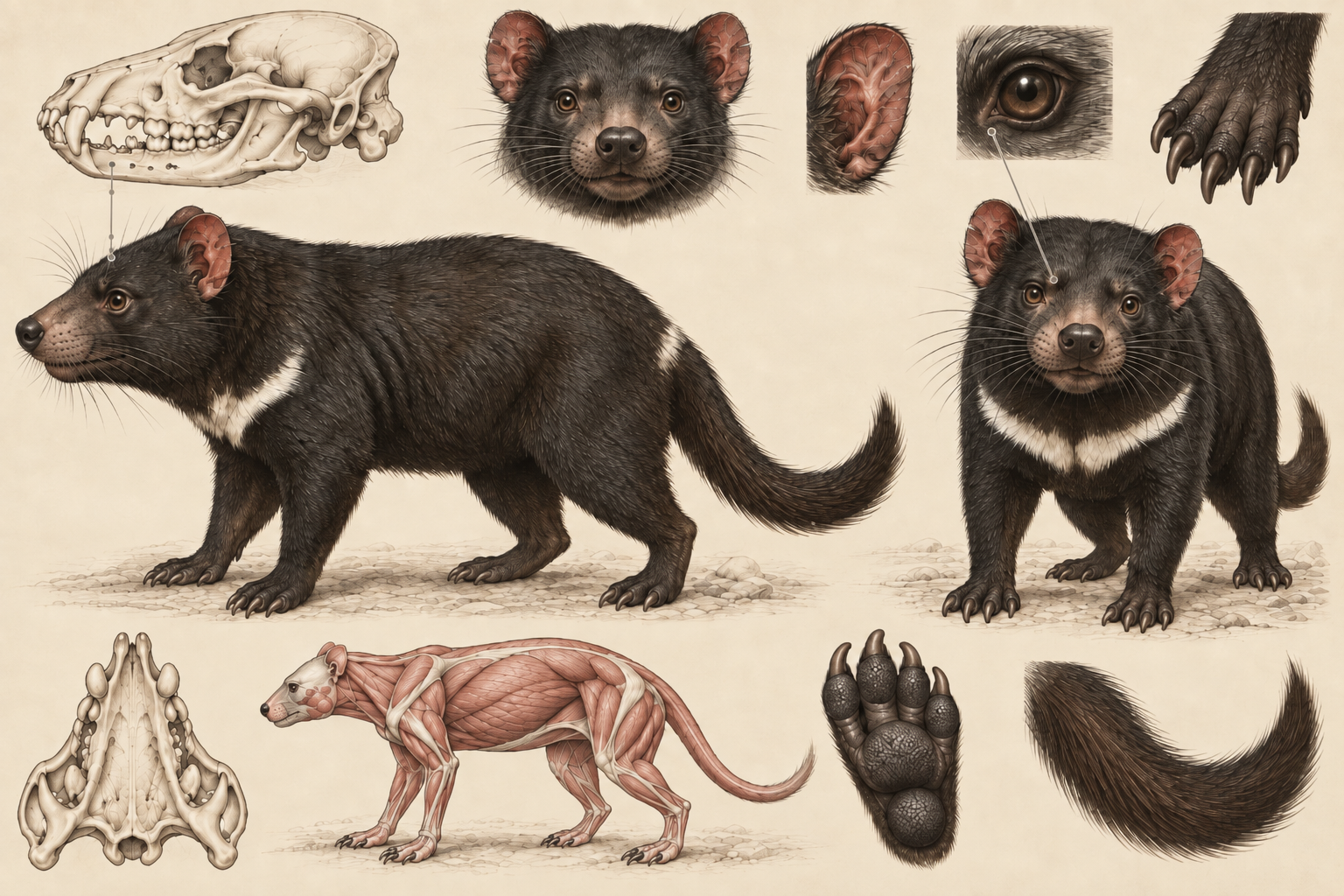
A useful field guide therefore keeps the animal, the disease, the road, and the people who share the island in the same frame.