Natural history / field notes
Forest floor, island scale
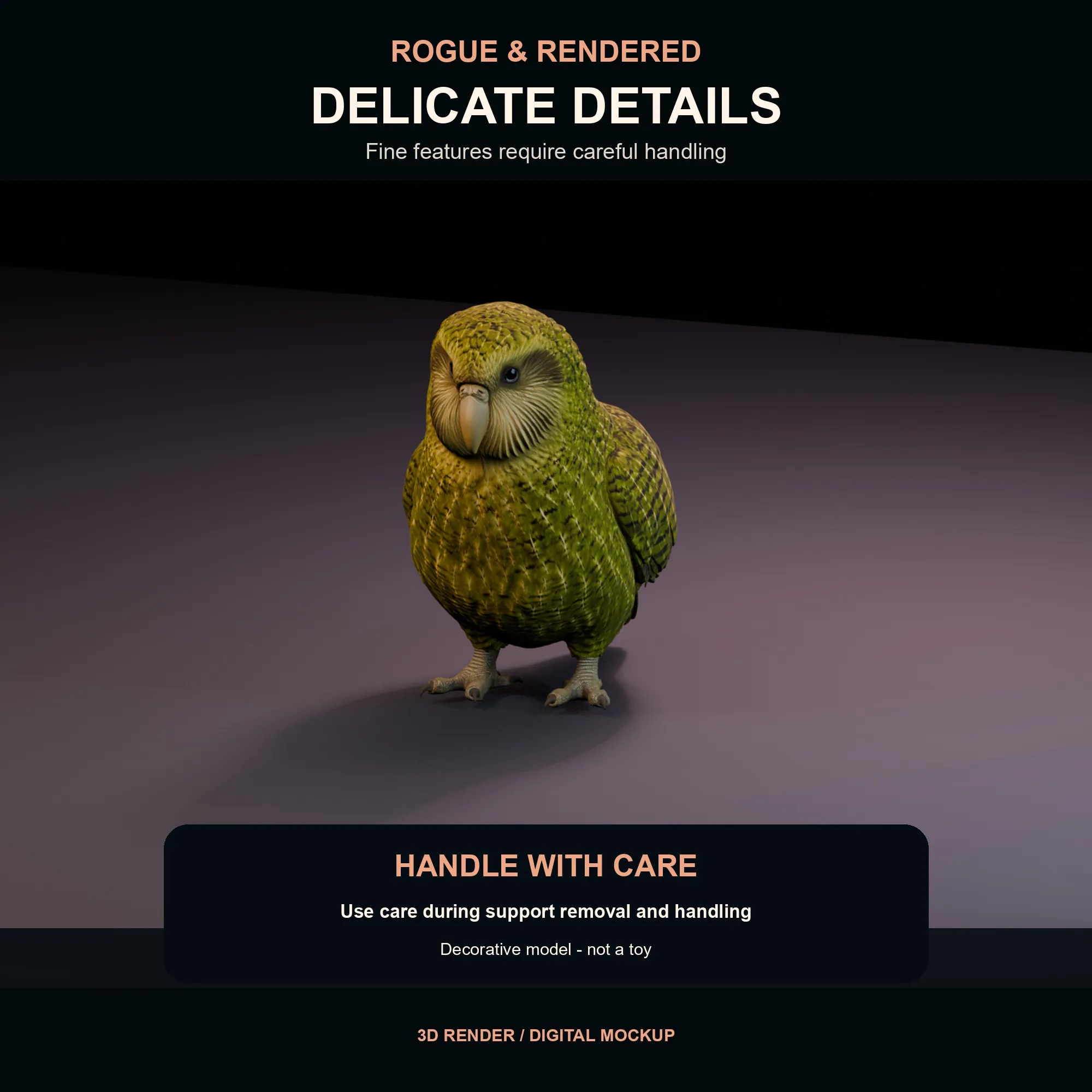
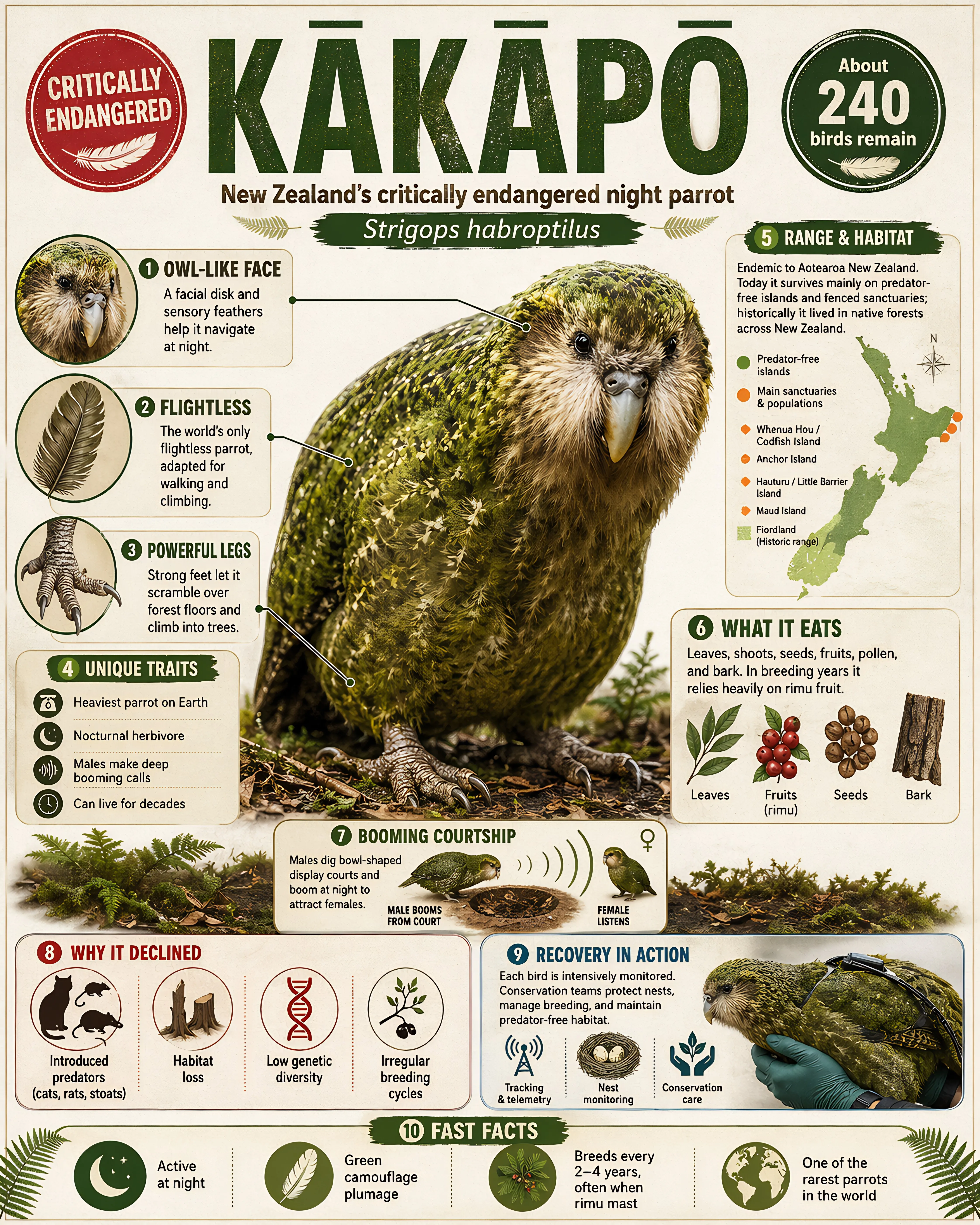
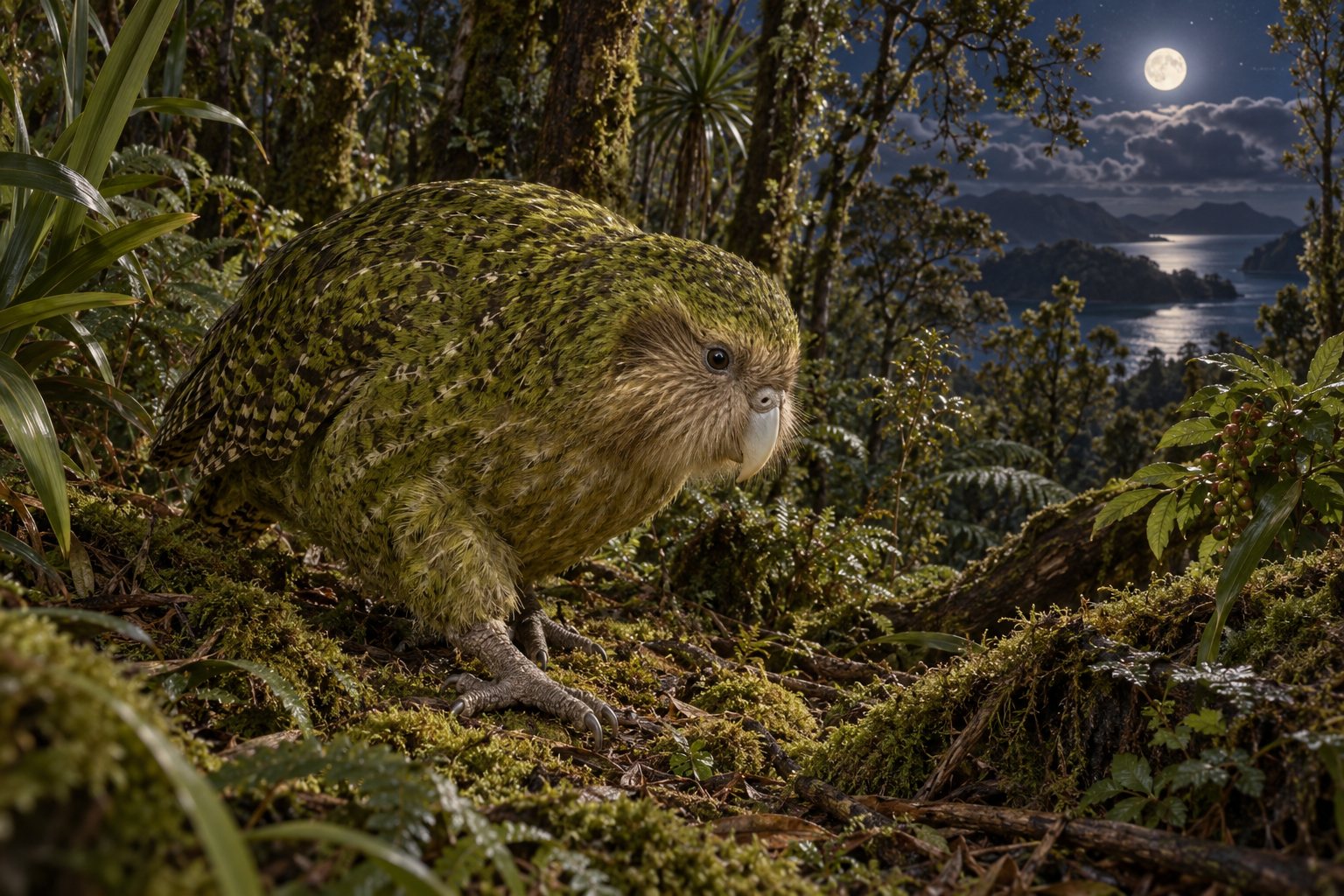
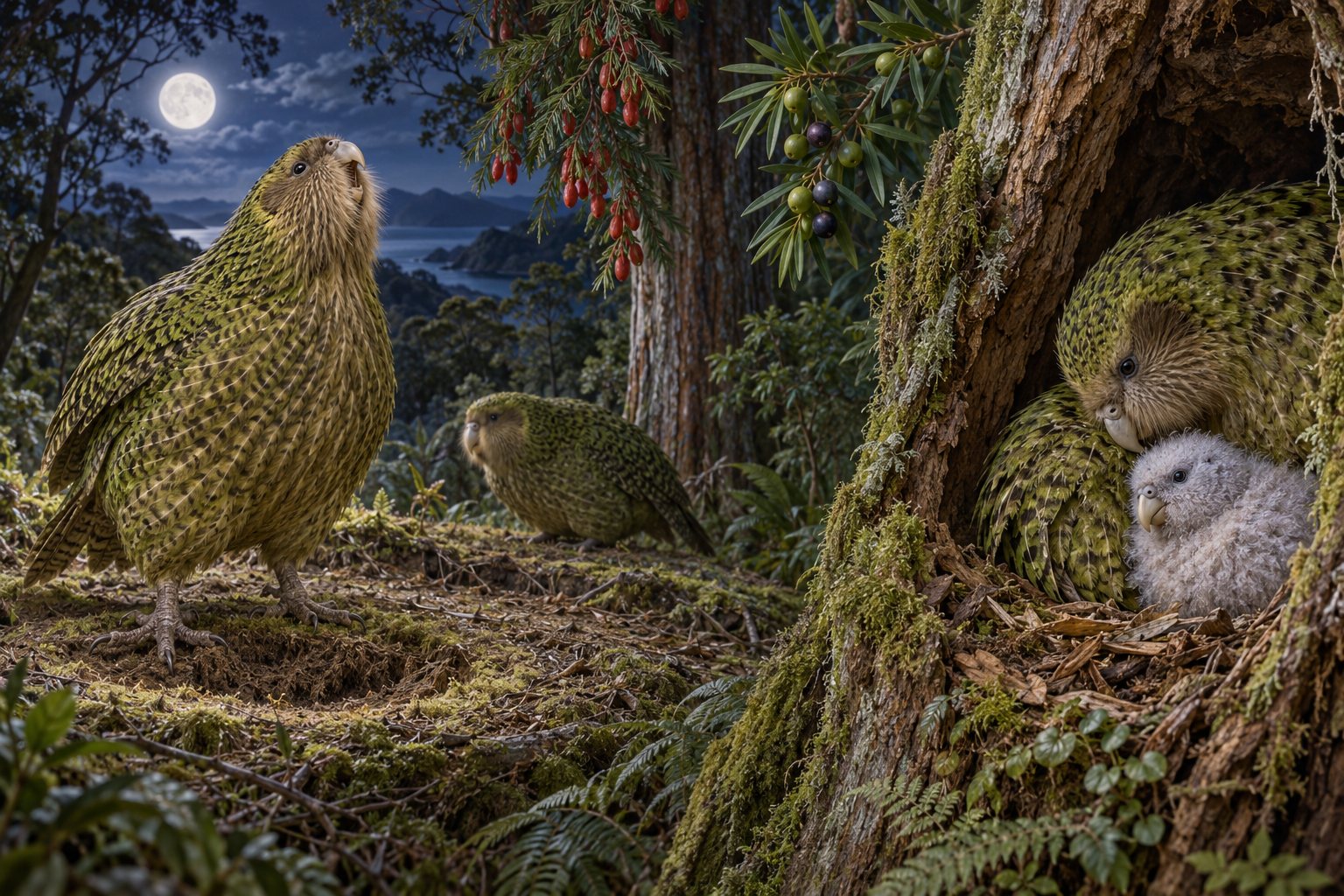
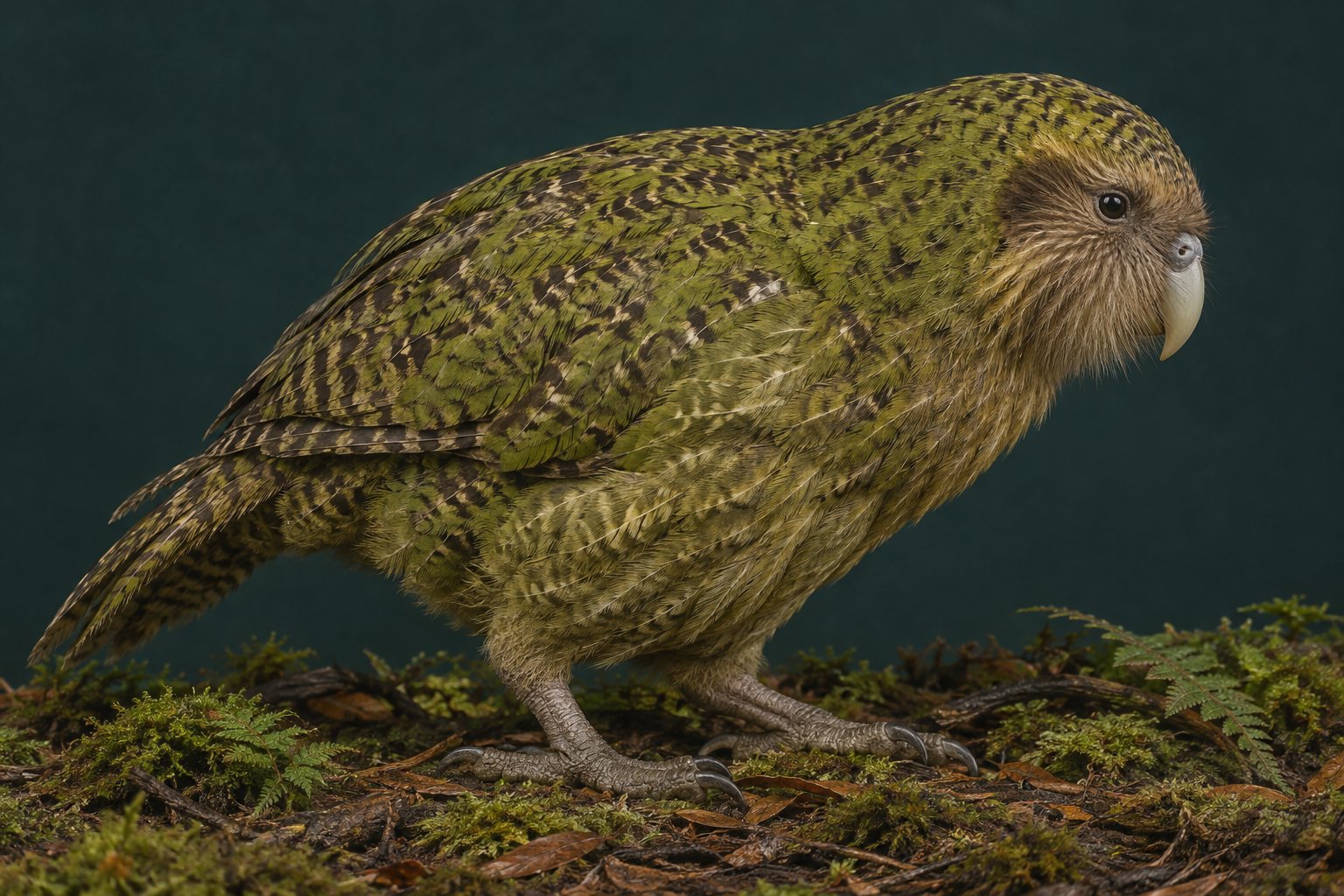
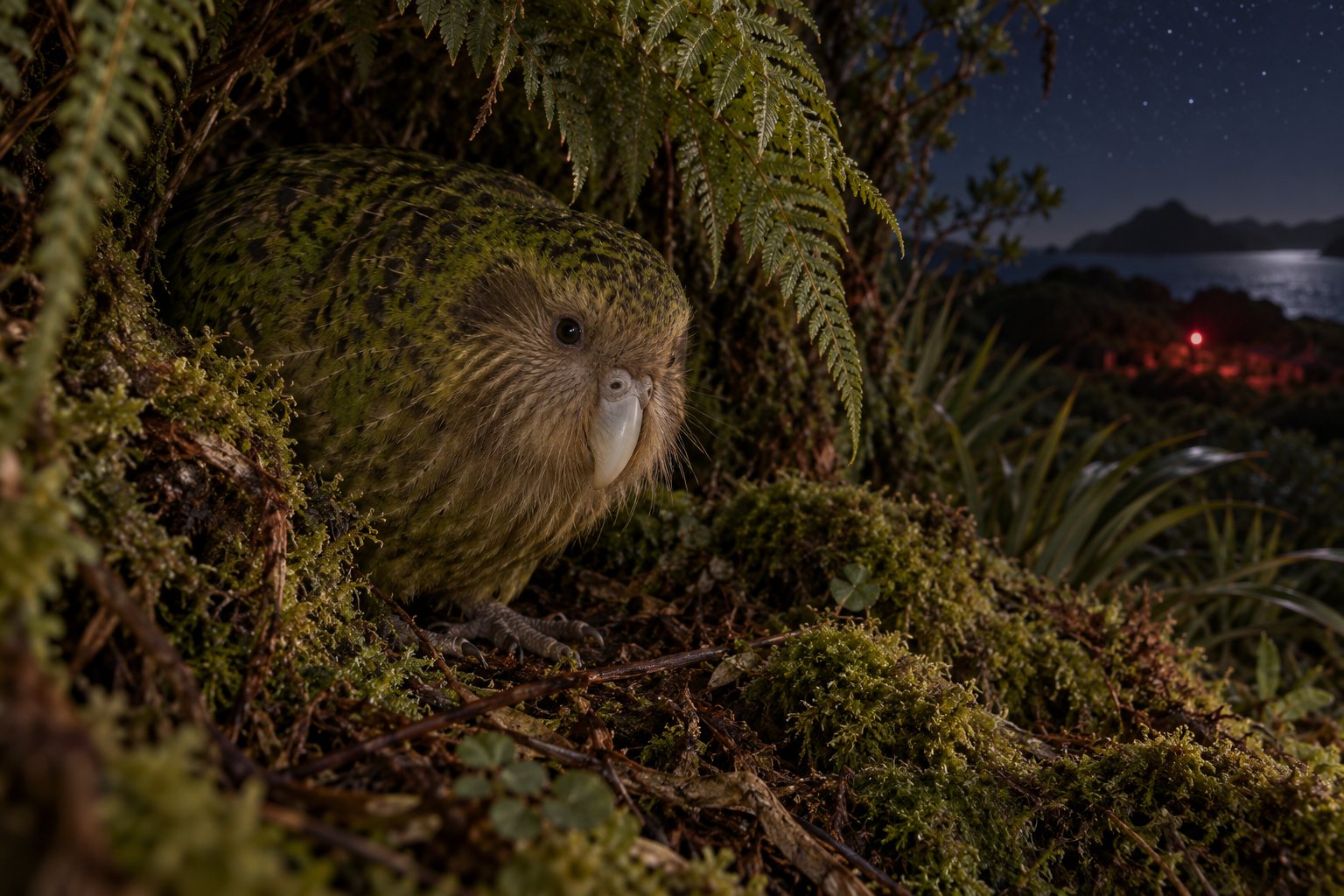
Kākāpō evolved without mammalian predators. Their powerful legs, moss-coloured feathers, and nocturnal habits make sense on a forest floor where concealment once worked.
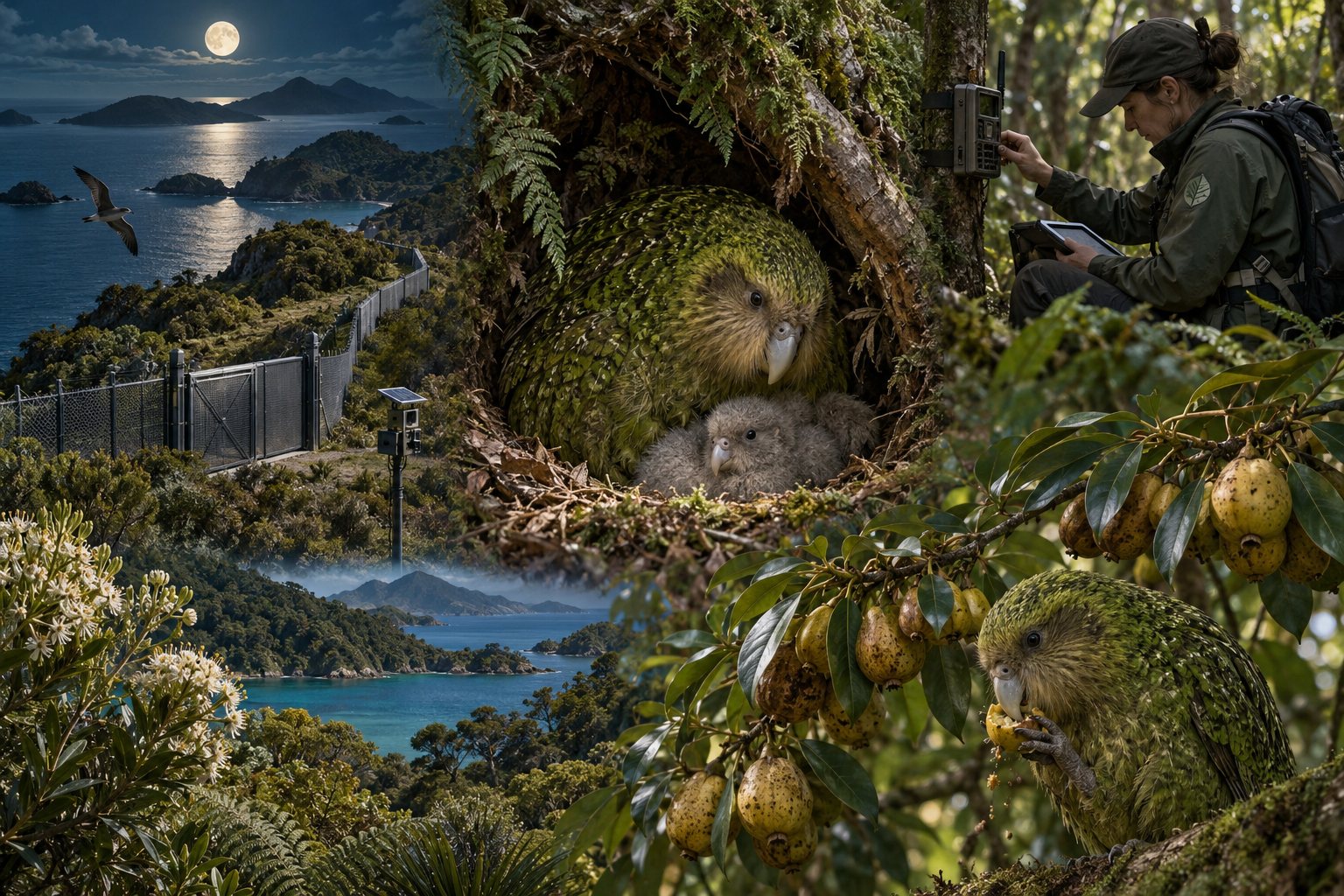
Modern recovery islands recreate that missing safety through biosecurity, intensive monitoring, and careful habitat management.
Booms across the dark
Males gather at display arenas and produce deep booming calls that travel through the landscape. Breeding is episodic and linked to mast years, when native trees produce abundant fruit.
That dependence makes the species both charismatic and ecologically specific: its calendar is written by the forest.
A conservation programme with a pulse
The Kākāpō Recovery Programme combines island biosecurity, nest surveillance, supplementary feeding, veterinary care, and genetic management. The work is high-touch because the population is small and every adult matters.
When the forest sets the season
Kākāpō breeding follows the forest’s abundance. Mast events create a pulse in the food web, and the birds’ nocturnal movements and booming displays gather around that pulse.
A recovery programme therefore reads time as carefully as it reads individuals: food, nests, health, and weather all shape what a season can hold.
Biosecurity is part of the habitat
For kākāpō, a predator-free island is not a backdrop but a daily practice. Checking boundaries, monitoring nests, supporting health, and managing genetic decisions all belong to the habitat story.
The programme’s tenderness has an engineering side: consistency, records, and careful attention make room for the birds’ own personalities and choices.