Natural history / field notes
A forest connected by movement
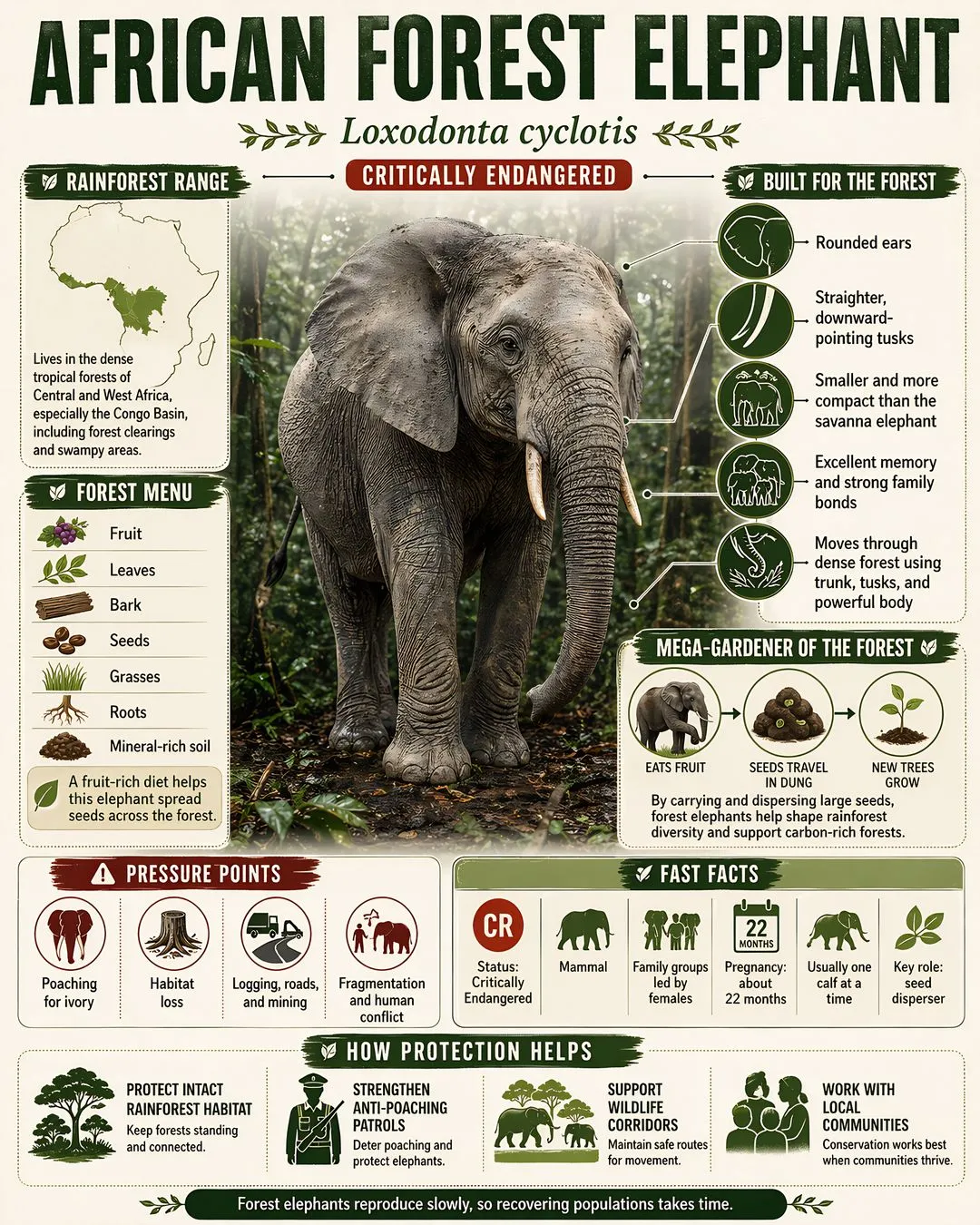
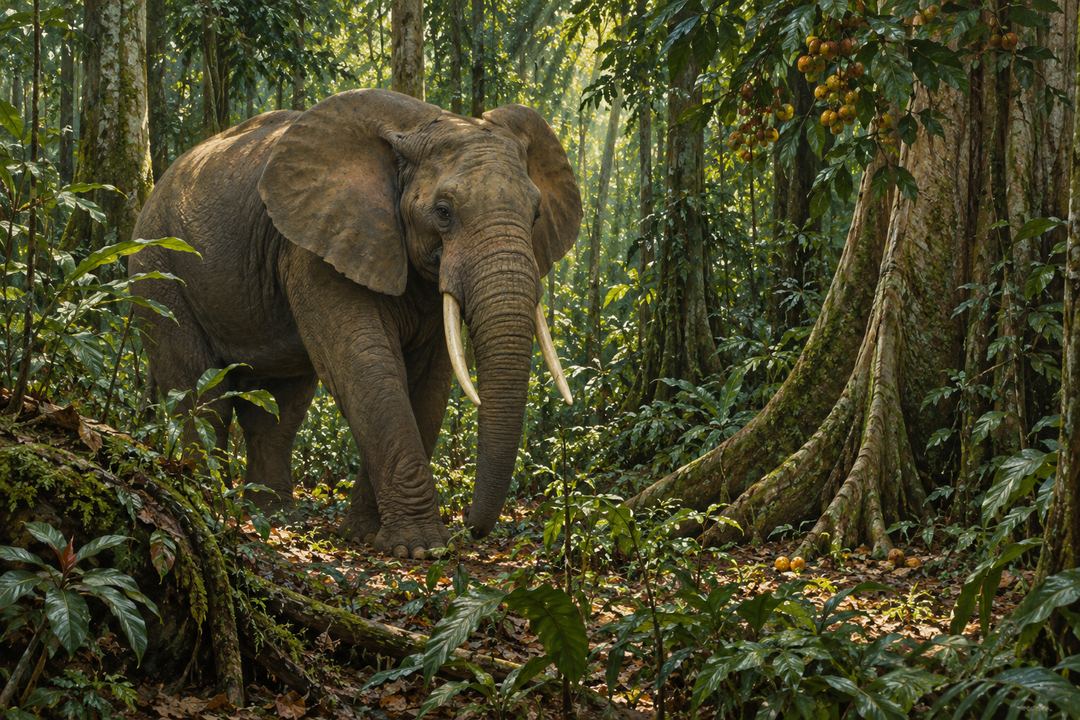
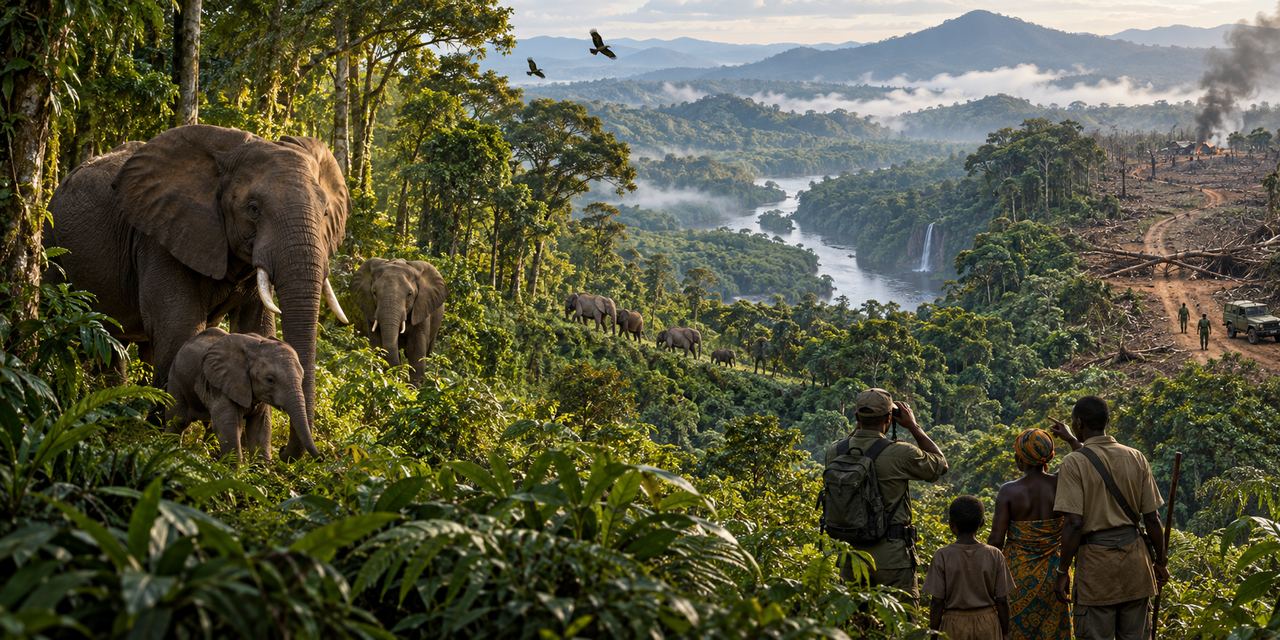
Forest elephants travel across large landscapes between feeding clearings, mineral licks, and water. Their movement connects places that may look separate on a satellite image.
The result is a species whose ecological footprint is much larger than the outline of its body.
Gardeners with a memory
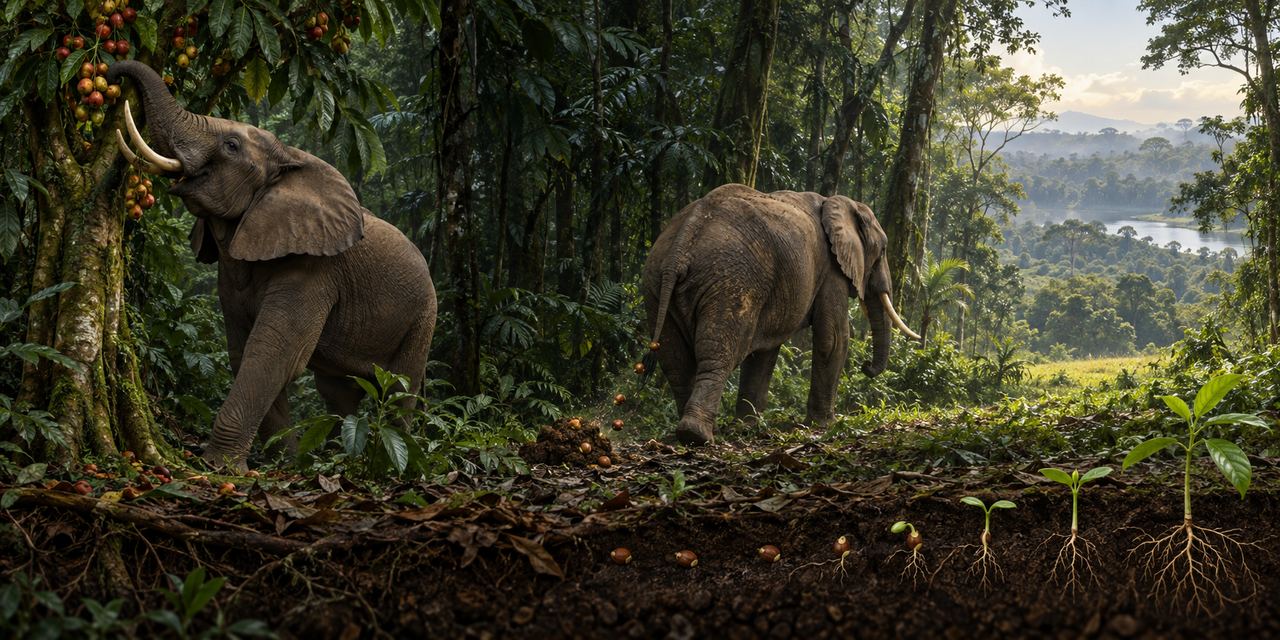
By eating fruit and carrying seeds across distance, elephants help maintain the composition and regeneration of tropical forests. Gut passage and movement can take seeds away from parent trees, although the distance and outcome vary by fruit, route, and forest.
These functions are difficult to replace once an elephant population is removed.
Protection that has to travel
Effective conservation combines anti-poaching, intelligence-led enforcement, protected-area connectivity, community rights, and long-term monitoring. Forest protection and elephant protection are the same project at landscape scale.
Distance is part of the social world
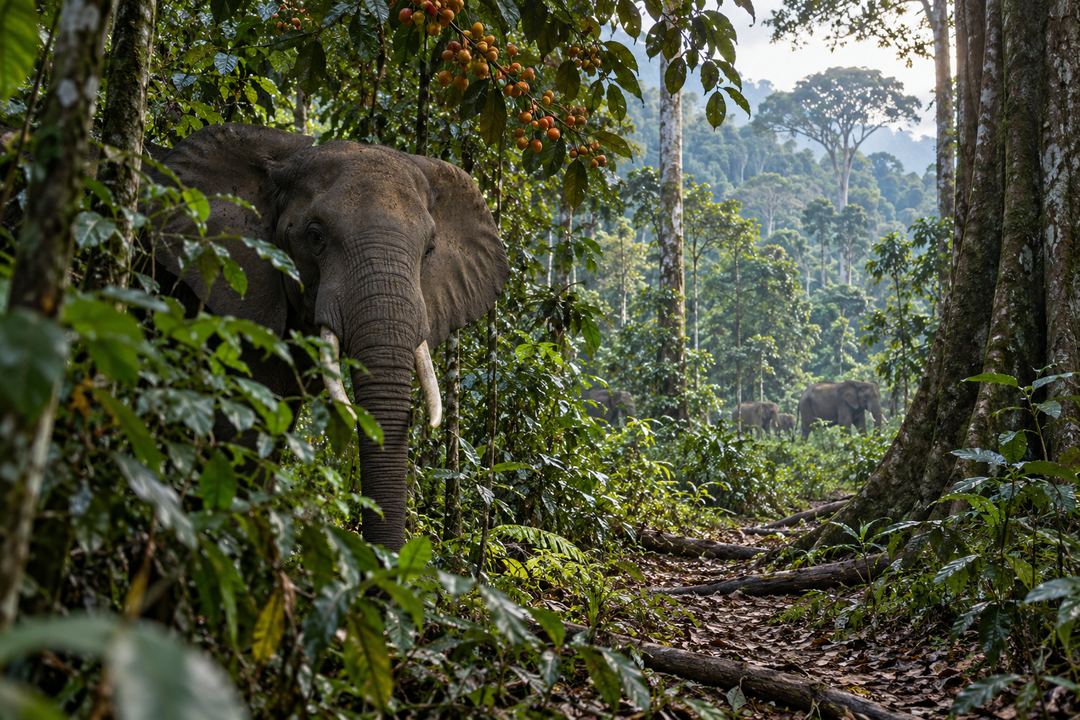
Forest elephants experience habitat through distance: remembered routes, low calls moving between trees, and the changing texture of clearings and cover. Their social world cannot be reduced to a close portrait.
Monitoring that respects this scale can reveal movement and decline while leaving the animals room to remain wild.
Protection has to move too
An elephant corridor is only as durable as the relationships that protect it. Anti-poaching patrols, connected habitat, community rights, and long-term surveys have to travel together across the landscape.
The measure of care is continuity: enough safety and space for elephants to keep doing the quiet work of shaping a forest.