Skip to content
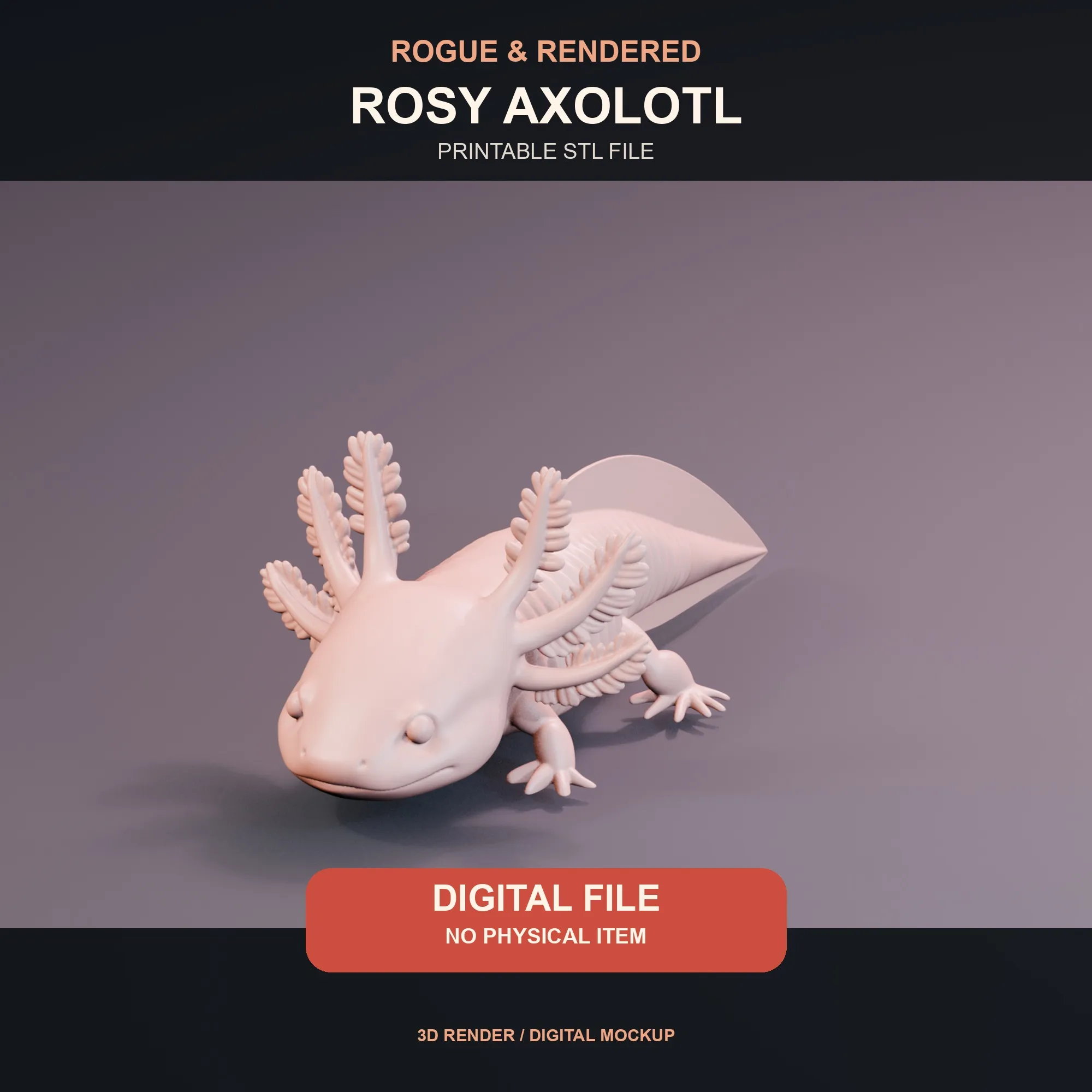
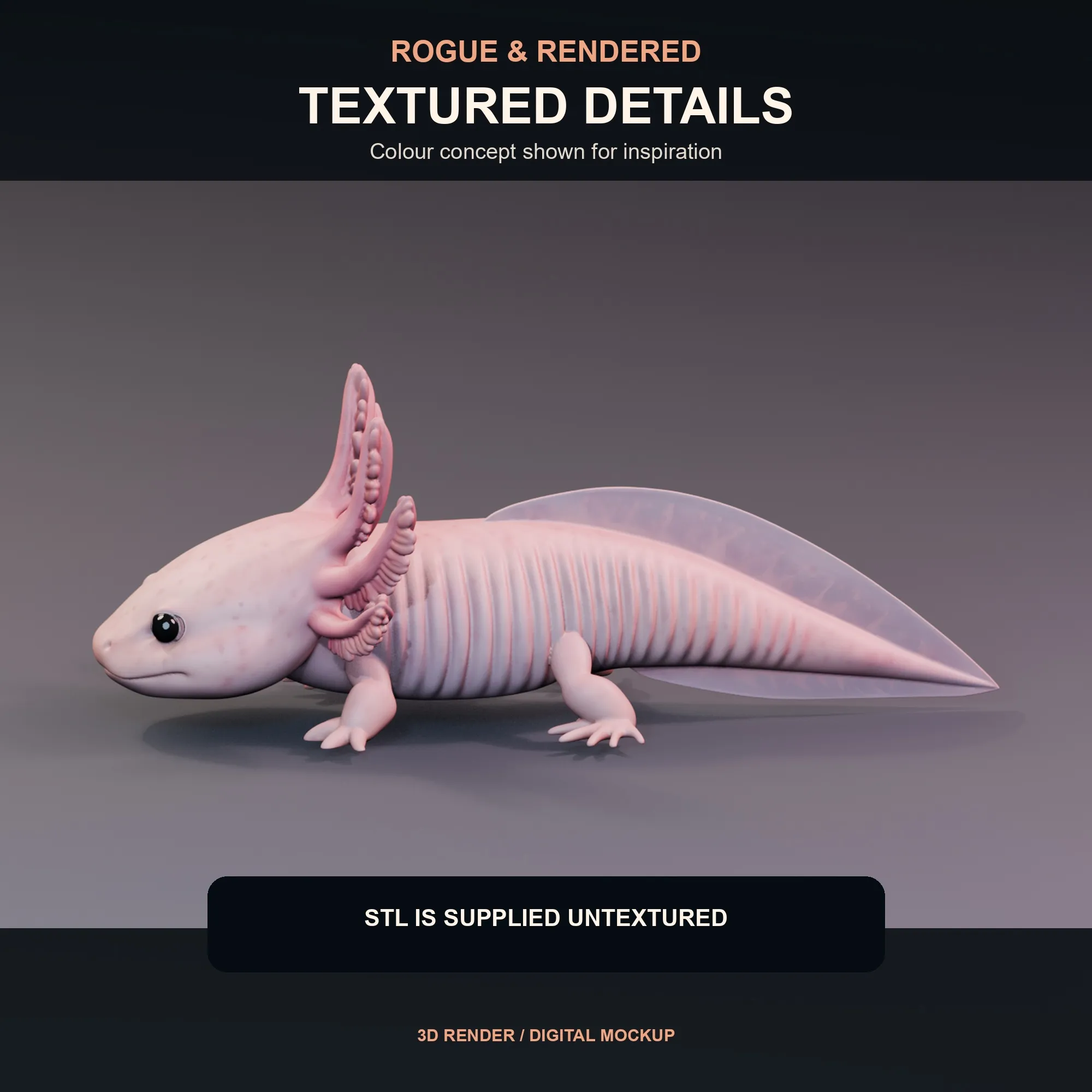
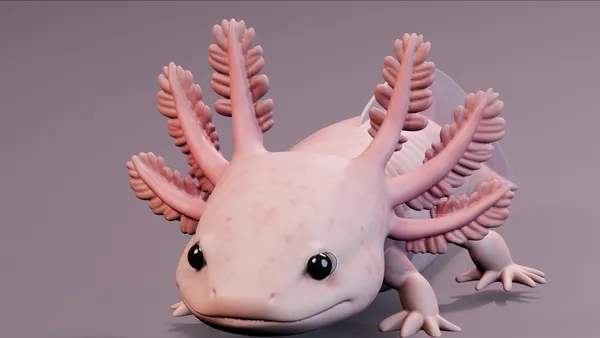
Three-quarter digital render of the rosy axolotl STL model on a dark background.3D render

3D render

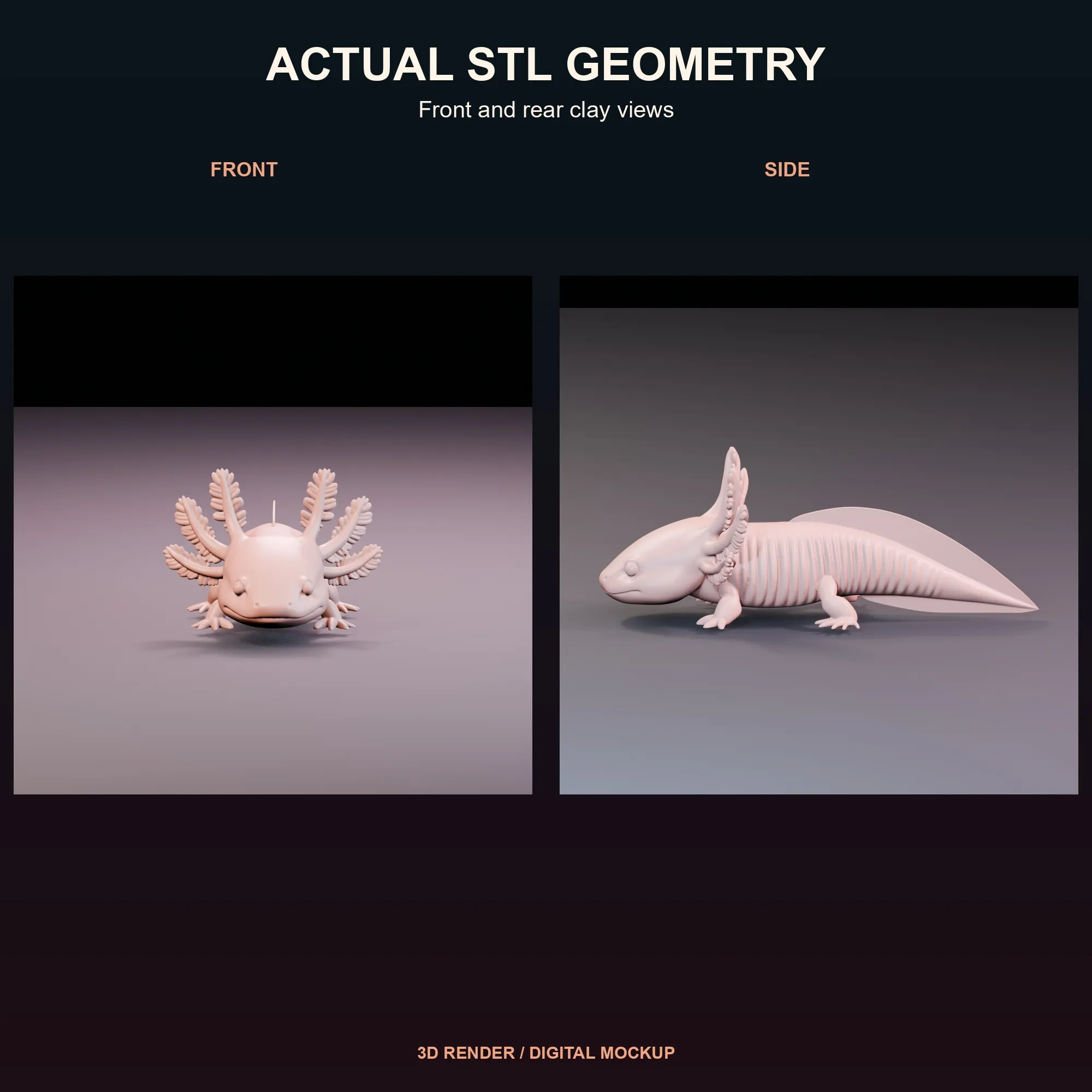
Turntable view

A 12-second turntable moving from a clay render to a coloured inspiration view. Texture and colour are shown for presentation and are not included in the STL.

Digital 3D model

Rosy Axolotl

Ambystoma mexicanum

A detailed rosy axolotl STL prepared for supported FDM printing at a 100 mm maximum dimension, with delicate external gills and clear print guidance.

See this model on Etsy

Digital model download. No physical item is shipped.

STL

Model and print details

Rosy Axolotl model specifications
DetailWhat to know
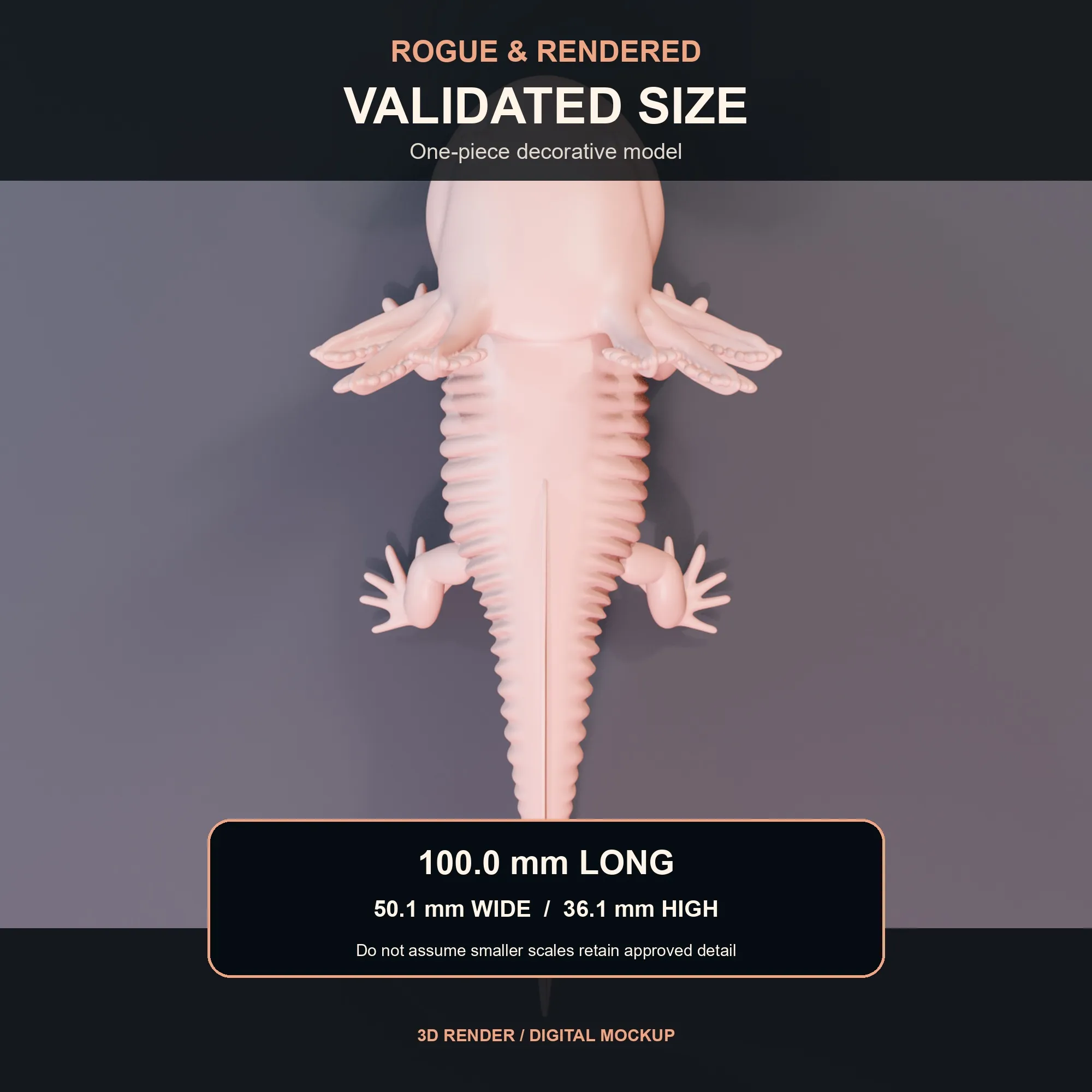
Dimensions (X × Y × Z)50.145 × 100 × 36.131 mm
Included formatsSTL
Parts1
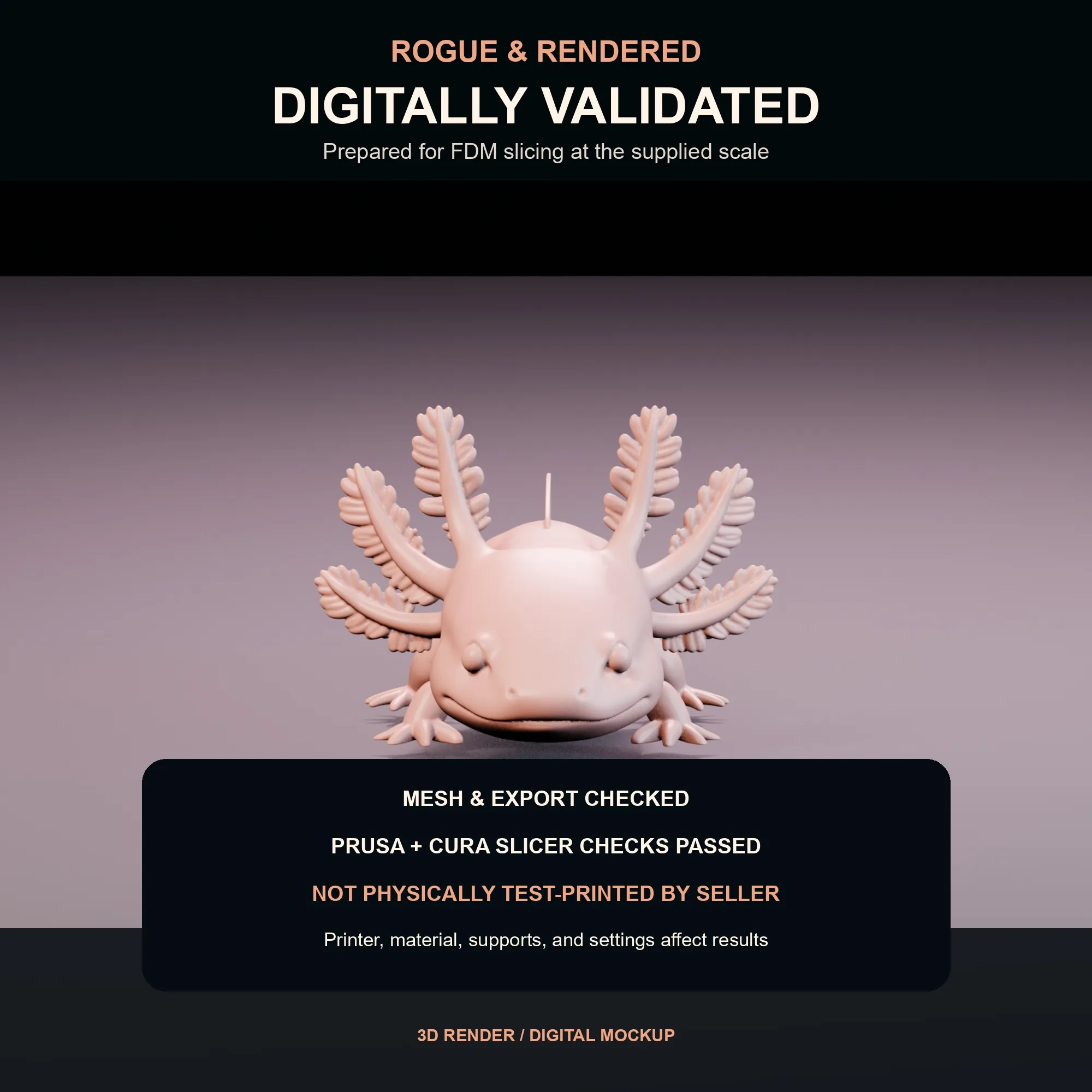
Digital validationCompleted at the published size.
Seller test printNo. Not physically test-printed by the seller.
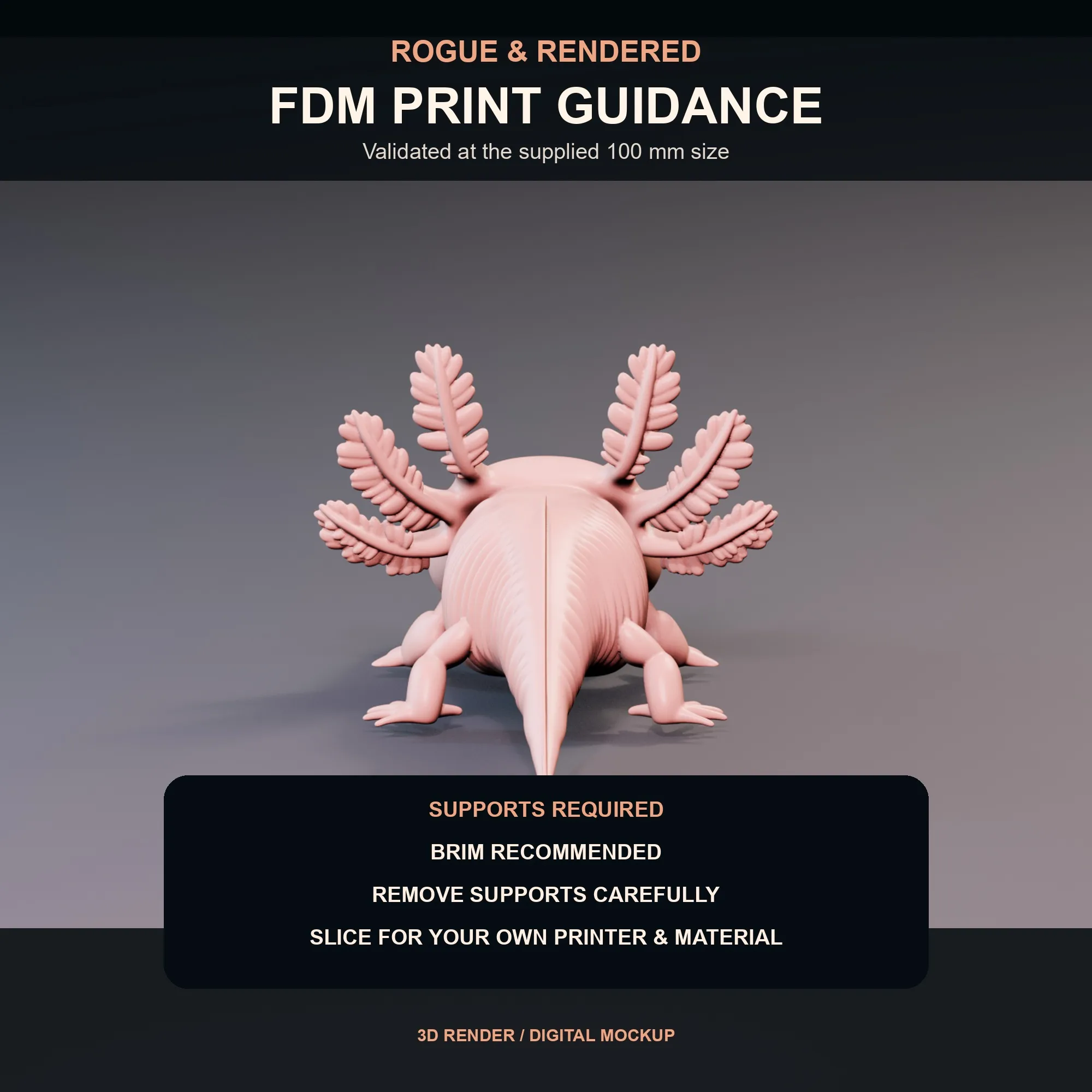
Print setupPrint with supports. A brim is recommended for added stability. Slice the STL for your own printer, material, scale, supports, and settings.
Before you print
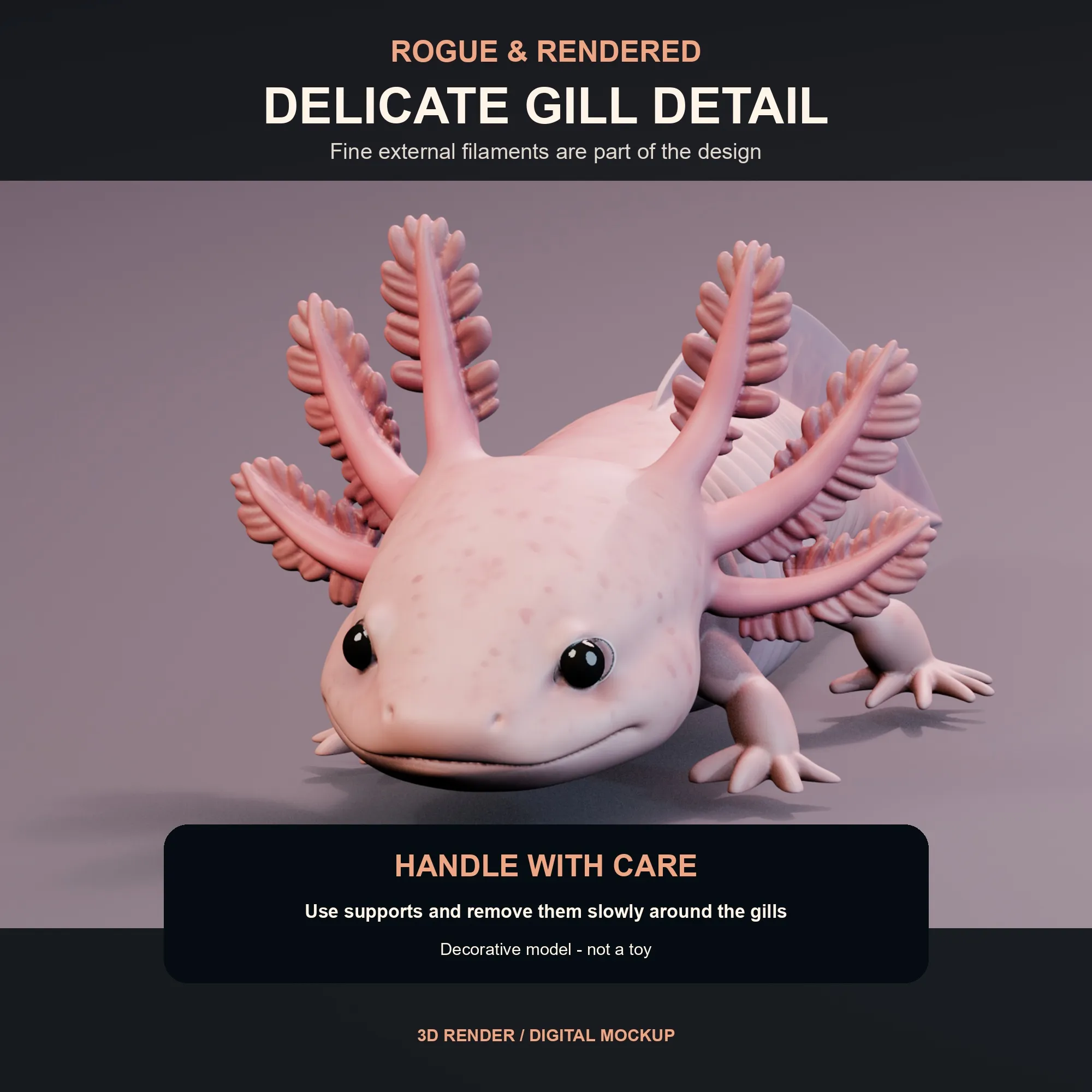
  • The external gill filaments are delicate. Remove supports carefully and handle them with care.
  • Only the published 100 mm maximum size has been digitally validated. Smaller scales may lose strength or detail.
  • Results vary with printer, material, scale, supports, and slicer settings.

Your printer, material, scale, supports, and slicer settings can affect the result.

Read the personal-use licence


Larger view

Rosy Axolotl image viewer

Literature-grade field guide · reviewed 2026-09-08

The living context behind the specimen

A salamander that keeps its juvenile silhouette for life: feathery gills, a finned tail, and an extraordinary capacity to regrow damaged tissue. In the wild, that silhouette belongs to the canals and wetlands of southern Mexico. Vegetated margins offer cover, oxygen, and hunting space; chinampa practices shape the edges; introduced fish and degraded water quality narrow the refuge. The famous body is only the beginning of the story. A living axolotl is a wetland relationship, held together by shade, flow, stewardship, and patience.

“Its famous regeneration is not a licence to simplify the animal. It is an invitation to look closer.”

IUCN Red List statusCritically EndangeredCR · trend: decreasingRead the assessment
Wild strongholdXochimilco wetland canals
Life strategyAquatic, paedomorphic salamander
Primary pressureWater-quality decline and introduced fish
Ecology at a glanceWhere a life fits
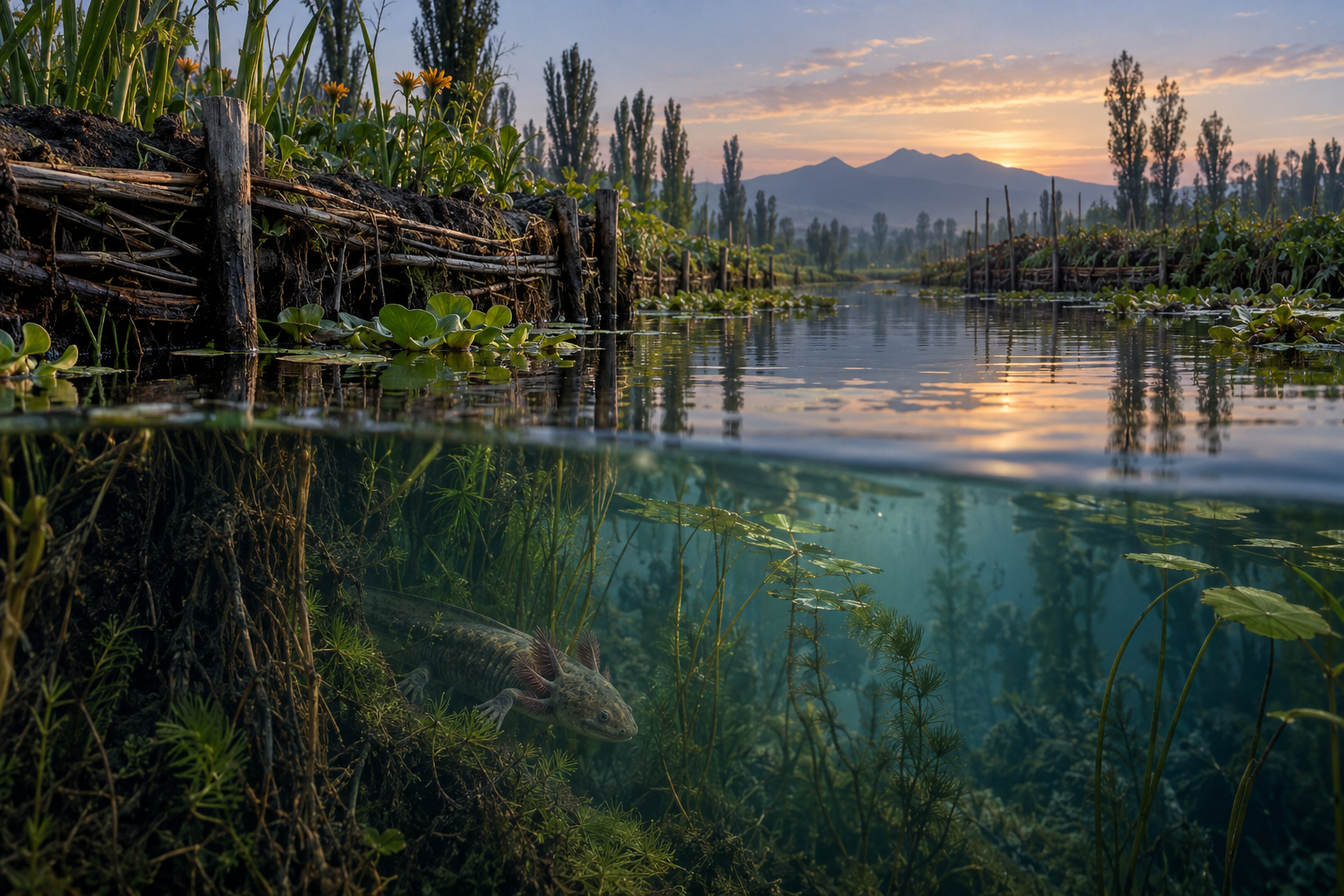
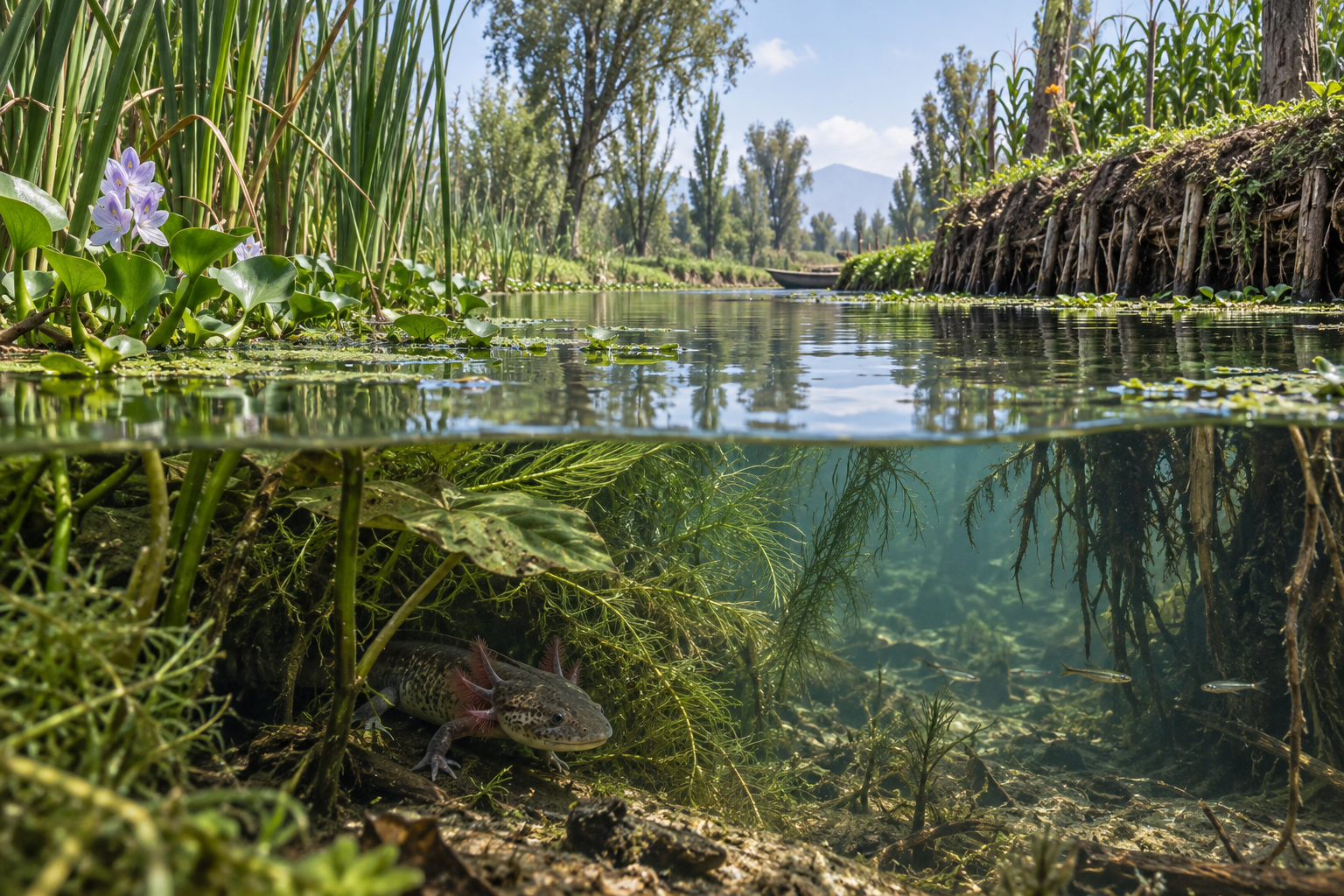
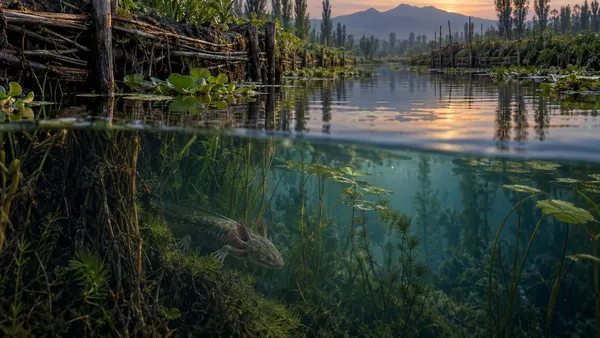
Editorial reconstruction of a restored Xochimilco chinampa canal at dawn, with a wild-type axolotl beneath a vegetated refuge edge.

Editorial reconstruction; not a documentary photograph.

FIG. 01HABITAT STRUCTURE
Xochimilco canal and chinampa refuge cross-section An explanatory section through a cultivated chinampa bank and canal. Rooted margins and submerged vegetation provide cover beside open water. Numbered leaders connect soil, water, vegetation and an axolotl to the legend. Not a surveyed site or a water-quality measurement.CHINAMPAREFUGE CANAL1234CONCEPTUAL SECTION · NOT TO SCALE
  1. Chinampa bankCultivated soil and rooted canal margins.
  2. Water columnWater quality and oxygen shape usable habitat.
  3. Submerged vegetationStructure for shelter and feeding.
  4. Axolotl near coverIllustrative position, not an observed individual.

An interpretive habitat model, not a surveyed canal. Colours do not indicate measured water quality. Basis: IUCN / CONABIO.

Conservation lensPressure → response
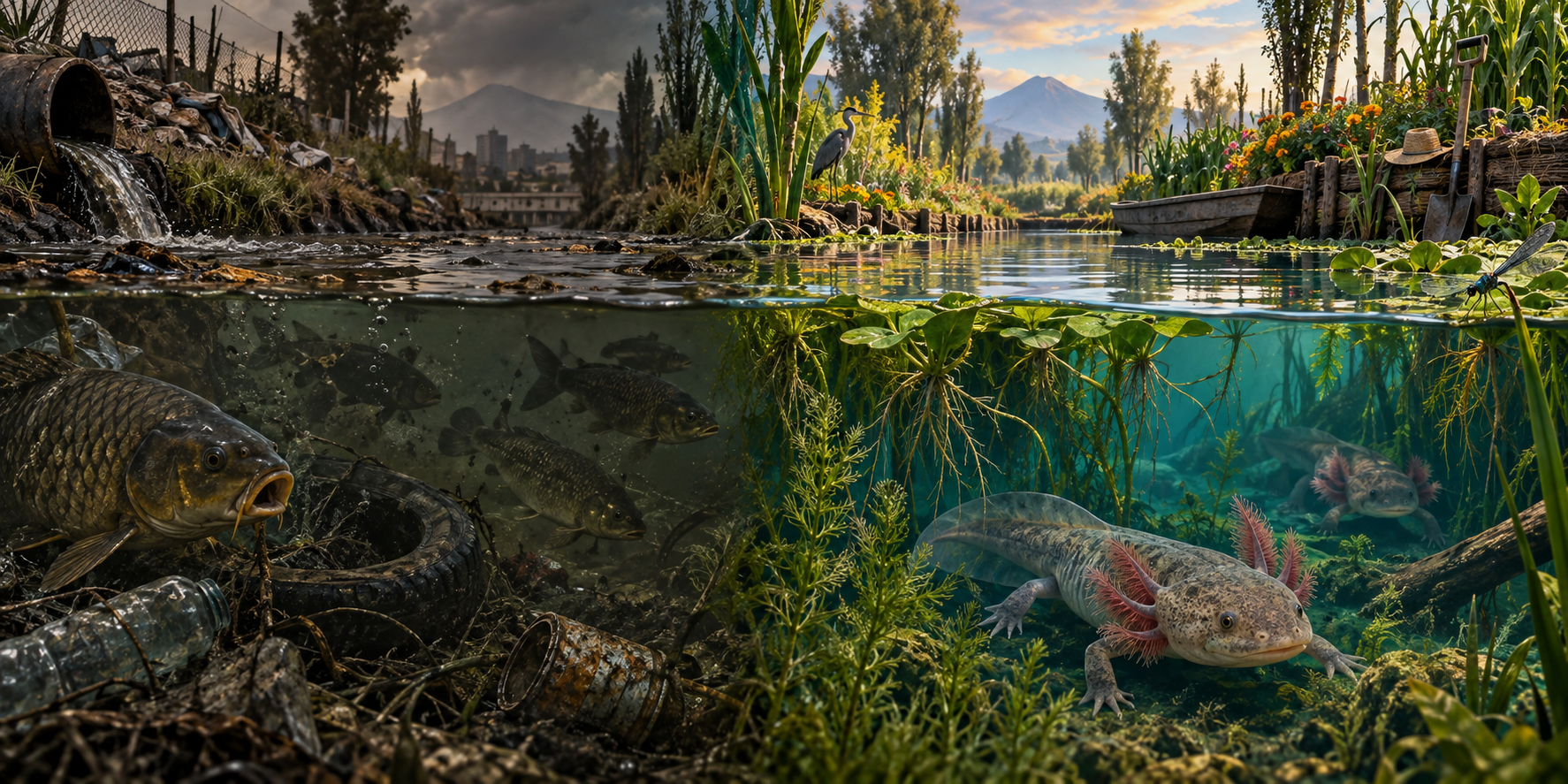
Interpretive conservation plate moving from degraded canal conditions toward restored axolotl refuge habitat.
FIG. 02RECOVERY CONDITIONS
PRESSURES
Water-quality declineIntroduced fish
HABITAT RESPONSE

Restore refuge canals

Chinampa restoration and care at the canal edge

Water qualityVegetated edgesRefuge management
INTENDED ECOLOGICAL RESULT

Habitat that supports wild axolotls

Shelter, feeding space and conditions for survival

Monitor → adjust → maintainWater-quality monitoring and community stewardship continue through the process.

Arrows show restoration logic, not a measured effect size or a guarantee of population recovery. Basis: IUCN / CONABIO.

Life-history rhythmA life spent in water
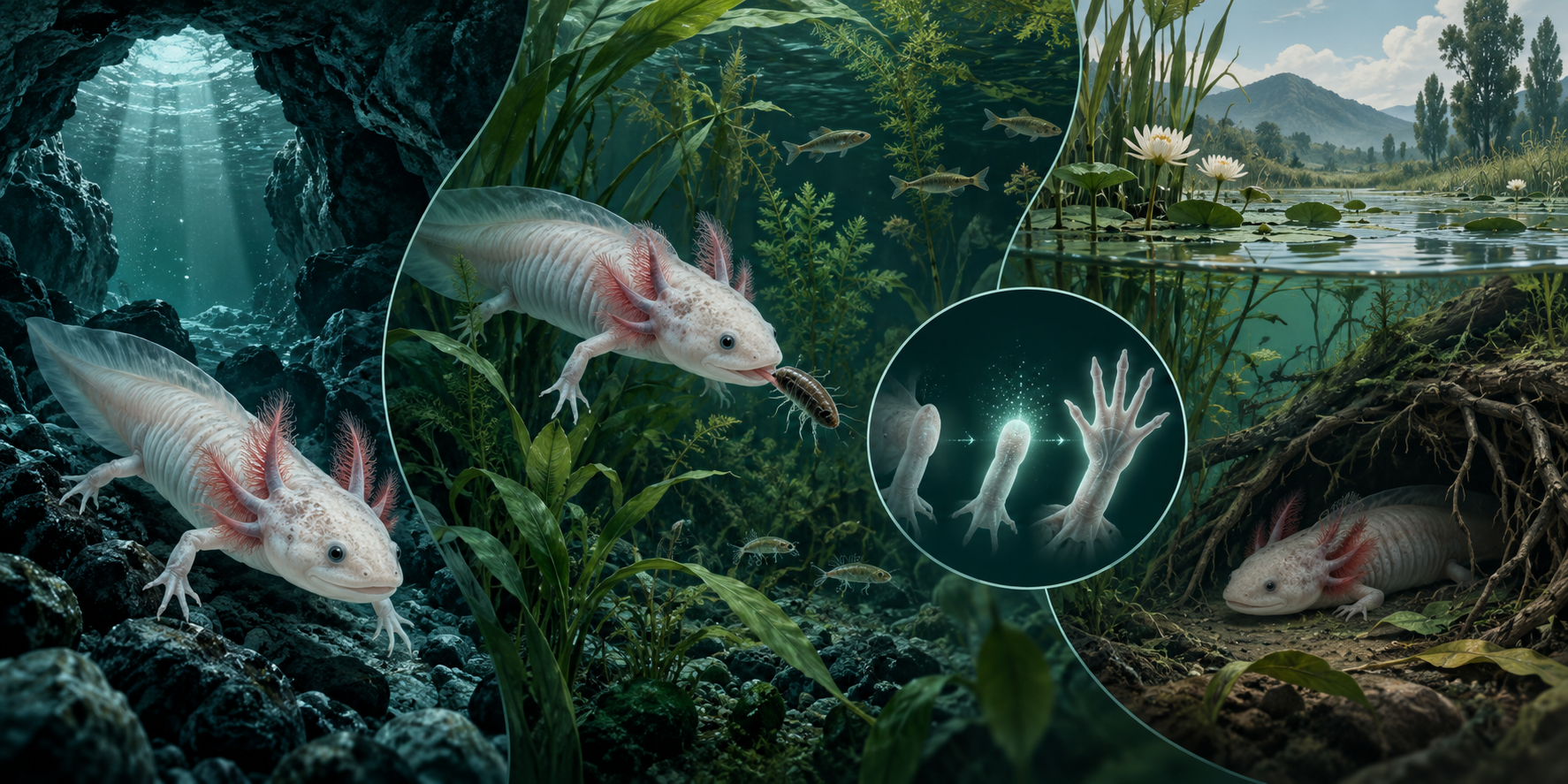
Interpretive axolotl life-history plate showing refuge, feeding, regeneration, and future recruitment.
FIG. 03AQUATIC DEVELOPMENT

Growing up without leaving the water

  1. 01

    Egg

    An embryo develops inside a jelly capsule.

  2. 02

    Larva

    External gills support an aquatic beginning.

  3. 03

    Juvenile

    Limbs develop as the animal grows and feeds.

  4. 04

    Adult

    Usually retains external gills and an aquatic body.

Reproduction begins the next generation. Adults retain traits of their larval form, a condition called paedomorphosis.

Developmental sequence, not a seasonal calendar. Stage lengths and body sizes are not to scale. Regeneration is a repair ability, not a life stage. Reference: Animal Diversity Web, Ambystoma mexicanum.

Morphology / study plateFeatures worth noticing
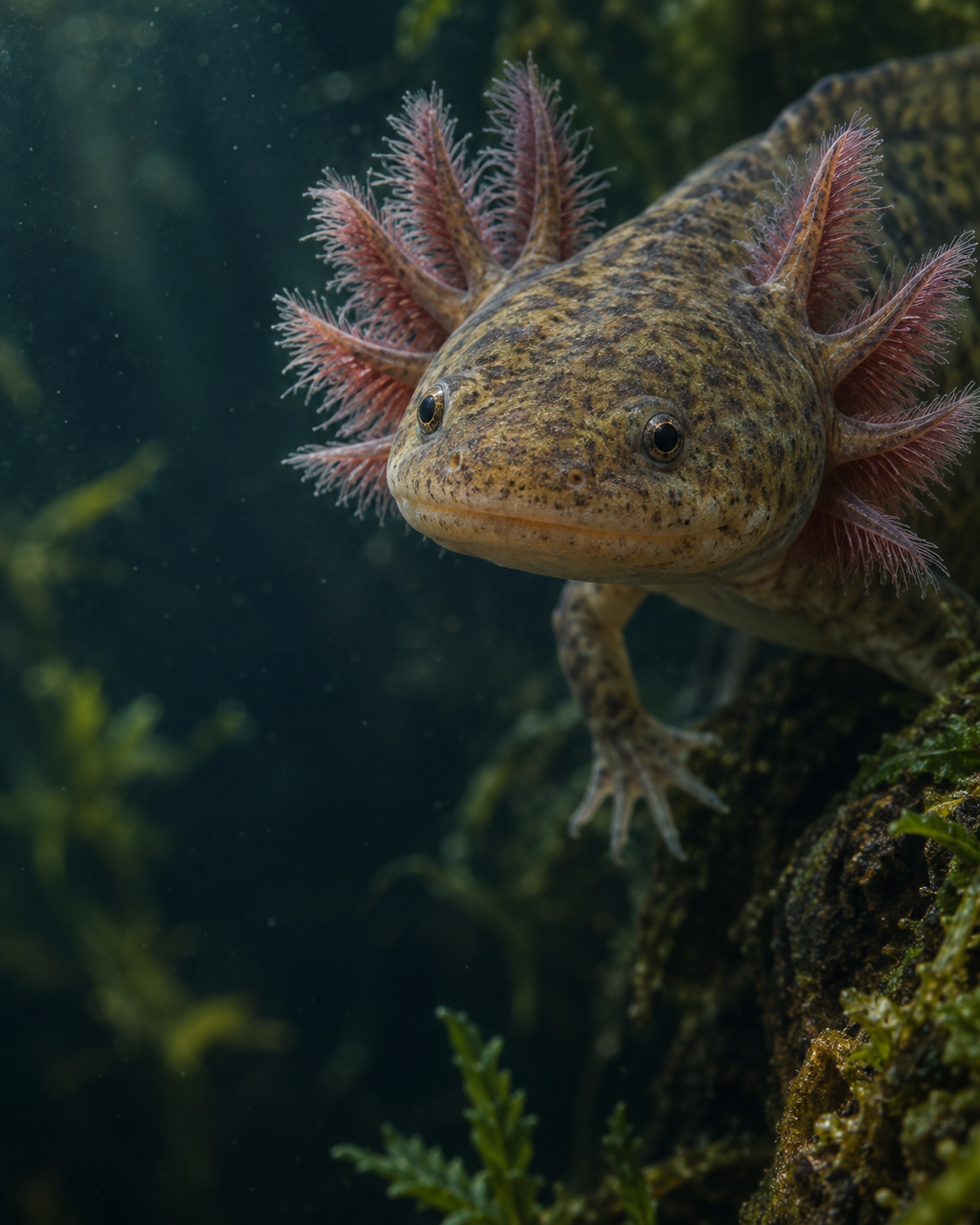
Editorial reconstruction macro study of an adult wild-type axolotl's external gills and broad head in clear freshwater.

Editorial reconstruction; gill anatomy is shown for observation, not as a specimen photograph.

01External gills
02broad head
03finned tail

Look for these structures in the turntable above. The form is an interpretation, not a claim about one wild individual.

Evidence lab · Axolotl

Read the refuge as a living system

These figures translate the cited field notes into inspectable relationships. They are interpretive teaching tools, not population estimates.

A canal is more than open water

Vegetated edges, oxygenated water, and submerged cover create the conditions an axolotl needs.

Schematic; not to scale. Read the layers as relationships, not measured depth.

Read the data as text
  1. Chinampa edge: Rooted soil and plants form cover above the canal.
  2. Water column: Water quality, oxygen, temperature, and prey shape daily habitat.
  3. Refuge substrate: Submerged plants and shaded structure reduce exposure to invasive fish.
Source: CONABIO, El Ajolote de Xochimilco; Zambrano et al. 2012Method: Interpretive cross-section; not to scale.

A remarkable body, an ordinary dependency

Neoteny and regeneration are biological observations that still depend on a functioning wetland.

  1. Aquatic formjuvenile → adult

    External gills and a finned tail are commonly retained into adulthood.

  2. Regeneration researchlaboratory evidence

    Limb and tissue regeneration are documented in experimental contexts; mechanisms and translation remain limited.

  3. Wetland lifeXochimilco

    Shelter, clean water, and connected refuge habitat remain ecological requirements.

Read the timeline as text
  1. Aquatic form — juvenile → adult: External gills and a finned tail are commonly retained into adulthood.
  2. Regeneration research — laboratory evidence: Limb and tissue regeneration are documented in experimental contexts; mechanisms and translation remain limited.
  3. Wetland life — Xochimilco: Shelter, clean water, and connected refuge habitat remain ecological requirements.
Source: Smith et al. 2022; McCusker & Gardiner 2011; IUCN 2019Method: Evidence sequence; laboratory findings are labelled separately from wild ecology.

When refuge conditions narrow

Threats interact: invasive fish and degraded water remove cover and feeding space at the same time.

1
Introduced carp and tilapia

Trophic overlap and predation pressure can reduce axolotl refuge quality.

2
Pollution and low oxygen

Degraded canal conditions reduce the safe, connected habitat available to wild animals.

3
Refuge restoration

Vegetated chinampa refuges and fish exclusion target water quality and shelter together.

Read pathways as text
  1. Introduced carp and tilapia: Trophic overlap and predation pressure can reduce axolotl refuge quality.
  2. Pollution and low oxygen: Degraded canal conditions reduce the safe, connected habitat available to wild animals.
  3. Refuge restoration: Vegetated chinampa refuges and fish exclusion target water quality and shelter together.
Source: Zambrano et al. 2010, 2012; IUCN 2019Method: Evidence pathway; not a causal-effect-size model.

Species dossier · visual reading

Read the wetland before the animal

A canal-edge study that keeps the axolotl’s famous body plan connected to the water, shade, and refuge it needs.

Watching ethicWild axolotls are extremely sensitive to disturbance. Treat the canal as habitat first, and the animal as a lucky observation.

What to notice
  1. vegetated canal edge
  2. cool, oxygenated water
  3. chinampa refuge
Interpretive field-observation plate of an axolotl sheltering among vegetated Xochimilco canal edges.

Interpretive, not to scale. Pair the prompts with the existing turntable and source-linked field notes.

Natural history / field notes

A larval form, deliberately retained

Unlike most salamanders, axolotls commonly retain external gills and an aquatic body plan into adulthood. The broad head and sensitive lateral-line system help it find prey in murky water.

Regeneration is remarkable, but survival still depends on ordinary ecological basics: clean water, shelter, and a connected wetland.

Restoration is local and practical

Conservation work combines chinampa restoration, refuge canals, water-quality monitoring, and community stewardship. Captive assurance can support research, but it cannot substitute for a functioning wild wetland.

A body that belongs to a calendar

Water quality is not a background variable for an axolotl; it is the daily rhythm of breathing, hunting, resting, and finding cover. The wetland has to remain usable through changing heat, flow, and human pressure.

Restoration becomes meaningful when it gives the animal time: time for refuge vegetation to return, for cleaner water to persist, and for a community practice to become ordinary again.

Care at the canal edge

The most intimate conservation work happens at the scale of a canal edge: tending chinampa margins, watching water, and keeping refuge spaces connected. Those acts are modest in appearance and cumulative in effect.

Captive assurance and laboratory research can deepen understanding, but the wild animal still needs a living wetland where local knowledge and habitat care meet.


Behind the Render